
Posterior Optimization with Clipped Objective for Bridging Efficiency and Stability in Generative Policy Learning
arXiv cs.RO / 4/3/2026
💬 OpinionIdeas & Deep AnalysisModels & Research
Key Points
- The paper proposes POCO (Posterior Optimization with Clipped Objective), an RL framework that turns generative policy improvement into a posterior inference problem over temporally extended action chunks.
- POCO uses an Expectation-Maximization-style procedure to distill a reward-weighted implicit posterior into the policy without requiring explicit likelihood estimation.
- It introduces an offline-to-online training strategy that ties online exploration to pre-trained policy priors, aiming to improve stability and sample efficiency.
- The method is model-agnostic, so it can fine-tune large VLA (vision-language-action) models without architectural changes.
- Experiments on 7 simulation benchmarks and 4 real-world contact-rich robotic tasks report that POCO avoids catastrophic policy collapse, beats state-of-the-art baselines, and reaches a 96.7% success rate in real-world tests.
Related Articles

90000 Tech Workers Got Fired This Year and Everyone Is Blaming AI but Thats Not the Whole Story
Dev.to

Microsoft’s $10 Billion Japan Bet Shows the Next AI Battleground Is National Infrastructure
Dev.to
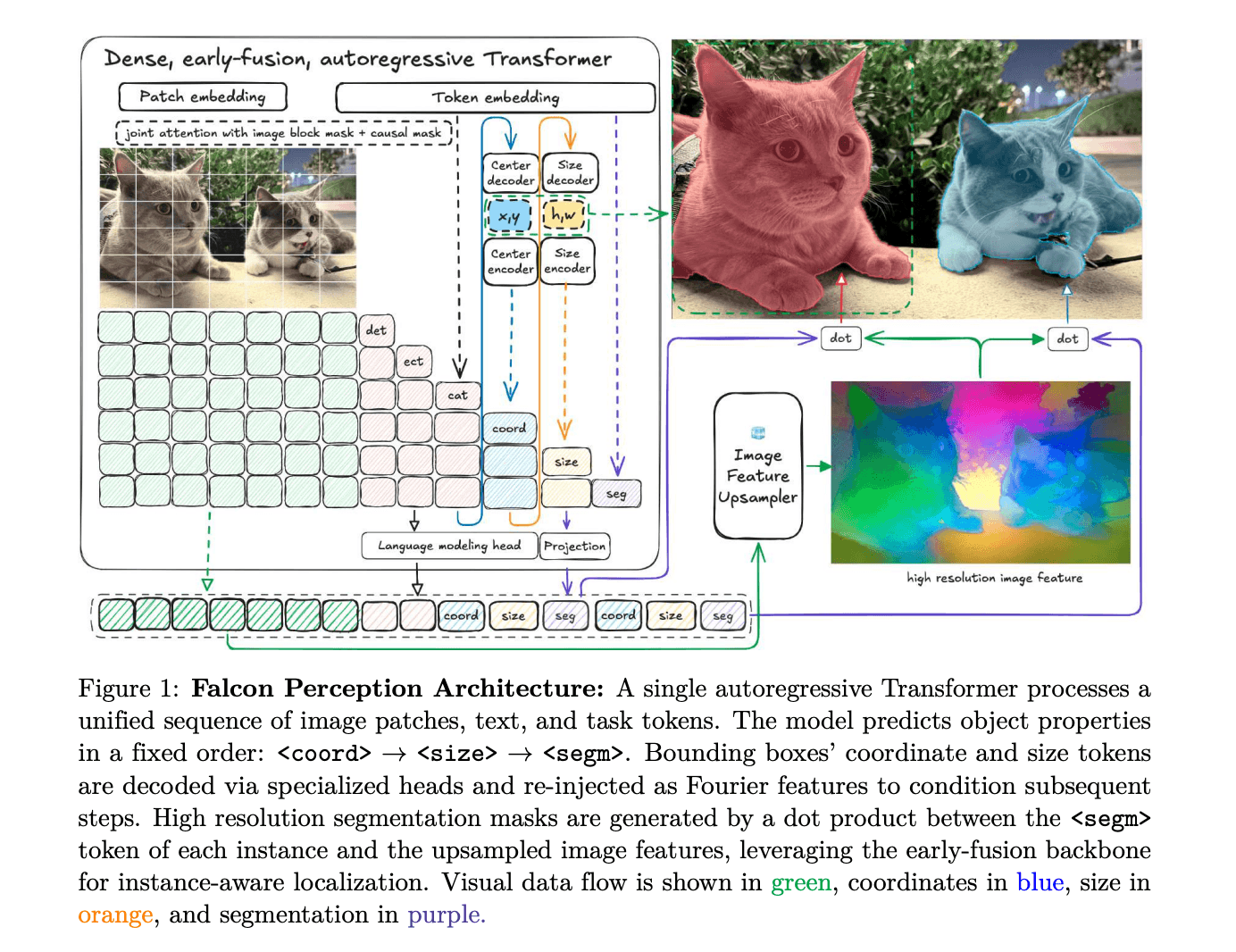
TII Releases Falcon Perception: A 0.6B-Parameter Early-Fusion Transformer for Open-Vocabulary Grounding and Segmentation from Natural Language Prompts
MarkTechPost
The house asked me a question
Dev.to

Precision Clip Selection: How AI Suggests Your In and Out Points
Dev.to


