
Learned Incremental Nonlinear Dynamic Inversion for Quadrotors with and without Slung Payloads
arXiv cs.RO / 4/15/2026
💬 OpinionSignals & Early TrendsIdeas & Deep AnalysisModels & Research
Key Points
- The paper addresses the challenge that conventional quadrotor flight controllers often ignore higher-order aerodynamic/dynamic forces due to the difficulty of estimating them in real time.
- It revisits Incremental Nonlinear Dynamic Inversion (INDI), which estimates residual forces from sensor-measurement differences, but notes that INDI’s dependence on specialized (often noisy) sensors—such as rotor RPM—limits its practical use.
- The authors propose using a neural network to produce smooth approximations of INDI residual-force outputs while eliminating the need for specialized rotor RPM sensor inputs.
- They also introduce a hybrid method that combines learning-based residual predictions with INDI, improving flexibility and robustness.
- Experiments with both standard multirotors and multirotors carrying slung payloads show that replacing the residual computation with a neural network reduces trajectory tracking errors and removes the need for the specialized sensor measurements.
Related Articles

Black Hat Asia
AI Business

The Complete Guide to Better Meeting Productivity with AI Note-Taking
Dev.to

5 Ways Real-Time AI Can Boost Your Sales Call Performance
Dev.to
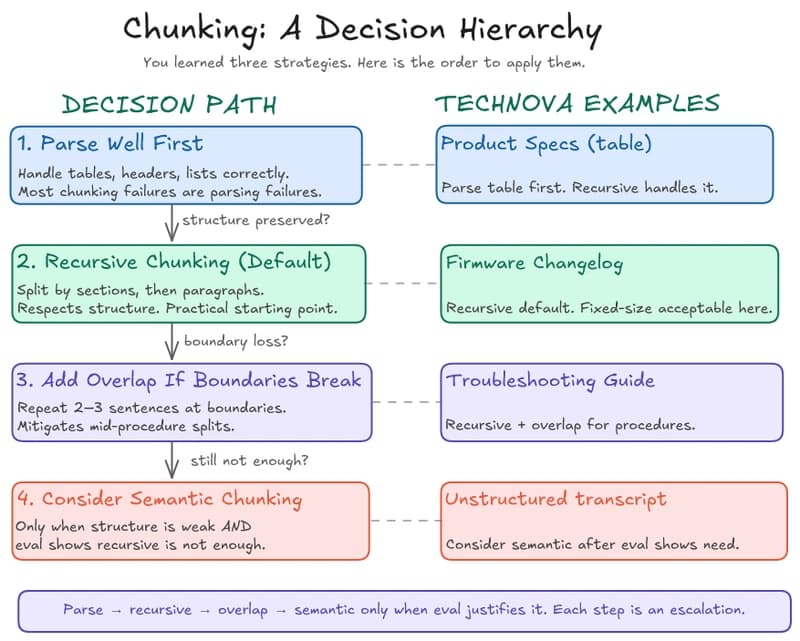
RAG in Practice — Part 4: Chunking, Retrieval, and the Decisions That Break RAG
Dev.to
Why dynamically routing multi-timescale advantages in PPO causes policy collapse (and a simple decoupled fix) [R]
Reddit r/MachineLearning


