
The Illusion of Superposition? A Principled Analysis of Latent Thinking in Language Models
arXiv cs.CL / 4/9/2026
💬 OpinionIdeas & Deep AnalysisModels & Research
Key Points
- The paper studies whether language models genuinely exploit “superposition” when using continuous latent chain-of-thought (Latent CoT) reasoning, rather than relying on theoretical claims alone.
- It evaluates three setups—training-free convex combinations, fine-tuning to generate latent thoughts, and from-scratch training—and finds that only from-scratch models show signs consistent with superposition use.
- In the training-free and fine-tuned regimes, the purported superposition typically collapses or is not meaningfully utilized, with models instead converging on shortcut solutions.
- The authors attribute these outcomes to (1) natural-language pretraining biases that cause commitment to a single token in later layers and (2) model capacity effects that shape which candidate solutions become favored.
- Overall, the work provides a principled explanation for when superposition emerges in continuous CoT and when it fails, outlining conditions under which it collapses.
Related Articles
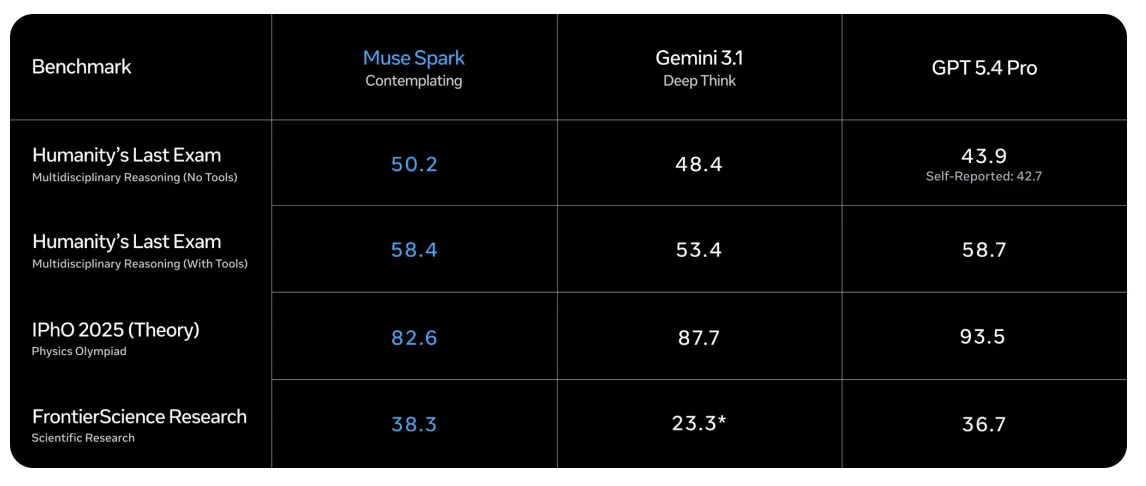
Meta Superintelligence Lab Releases Muse Spark: A Multimodal Reasoning Model With Thought Compression and Parallel Agents
MarkTechPost

Chatbots are great at manipulating people to buy stuff, Princeton boffins find
The Register

Big Tech firms are accelerating AI investments and integration, while regulators and companies focus on safety and responsible adoption.
Dev.to
v0.20.5
Ollama Releases

Charades-Ego: A Large-Scale Dataset of Paired Third and First Person Videos
Dev.to


