
Future-Interactions-Aware Trajectory Prediction via Braid Theory
arXiv cs.AI / 3/24/2026
💬 OpinionIdeas & Deep AnalysisModels & Research
Key Points
- The paper tackles multi-agent trajectory prediction for autonomous driving by using braid theory as an exact descriptor of how agents’ future trajectories intersect and coordinate over time.
- It argues that prior braid-theory uses were limited (e.g., mostly constraining attention), and instead proposes leveraging braid expressivity to directly condition the predicted trajectories.
- The authors introduce a parallel auxiliary learning objective, “braid prediction,” which classifies crossing types (edges) between agents in the braid representation to improve the model’s social/future-intention awareness.
- Experiments on three datasets show significant gains in joint prediction metrics, with negligible extra complexity at training or inference time.
- The work is shared as a reproducible artifact with code released on GitHub.
Related Articles
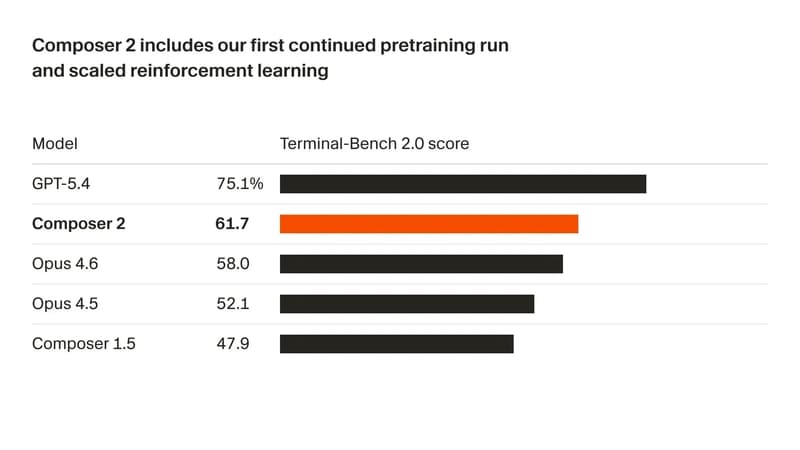
Composer 2: What is new and Compares with Claude Opus 4.6 & GPT-5.4
Dev.to
How UCP Breaks Your E-Commerce Tracking Stack: A Platform-by-Platform Analysis
Dev.to
AI Text Analyzer vs Asking Friends: Which Gives Better Perspective?
Dev.to
[D] Cathie wood claims ai productivity wave is starting, data shows 43% of ceos save 8+ hours weekly
Reddit r/MachineLearning

Microsoft hires top AI researchers from Allen Institute for AI for Suleyman's Superintelligence team
THE DECODER


