
Can Multimodal Large Language Models Understand Pathologic Movements? A Pilot Study on Seizure Semiology
arXiv cs.CV / 5/6/2026
💬 OpinionIdeas & Deep AnalysisModels & Research
Key Points
- The pilot study tests multimodal large language models (MLLMs) for zero-shot recognition of pathological seizure-related movements from clinical video recordings using 20 ILAE-defined semiological features.
- MLLMs beat baseline fine-tuned CNN and ViT models on 13 of 18 features without task-specific training, with stronger performance on salient postural/contextual cues and weaker performance on subtle high-frequency movements.
- Targeted preprocessing—such as facial cropping, pose estimation, and audio denoising—improved results on 10 of 20 features, suggesting that domain-specific signal enhancement can mitigate model blind spots.
- Expert review indicated that 94.3% of MLLM explanations for correctly predicted cases had at least 60% faithfulness scores, making the generated rationales broadly consistent with epileptologist reasoning.
- The work provides a publicly available codebase and proposes an interpretable, efficient route to adapt general-purpose MLLMs for specialized clinical video analysis.
Related Articles

Top 10 Free AI Tools for Students in 2026: The Ultimate Study Guide
Dev.to

AI as Your Contingency Co-Pilot: Automating Wedding Day 'What-Ifs'
Dev.to
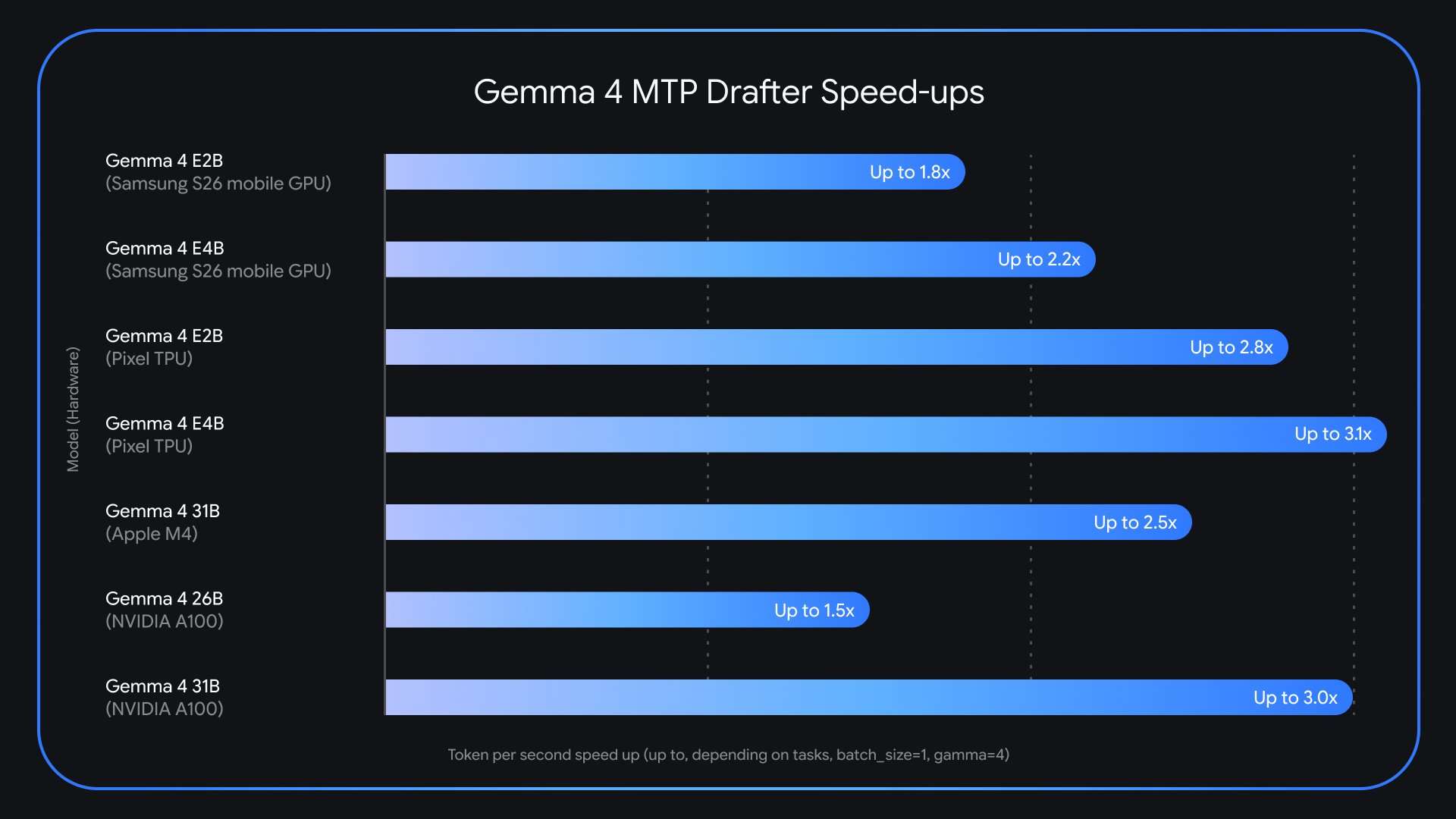
Google AI Releases Multi-Token Prediction (MTP) Drafters for Gemma 4: Delivering Up to 3x Faster Inference Without Quality Loss
MarkTechPost
When Claude Hallucinates in Court: The Latham & Watkins Incident and What It Means for Attorney Liability
MarkTechPost
Solidity LM surpasses Opus
Reddit r/LocalLLaMA


