
Context- and Pixel-aware Large Language Model for Video Quality Assessment
arXiv cs.CV / 5/6/2026
💬 OpinionIdeas & Deep AnalysisModels & Research
Key Points
- The paper introduces CP-LLM, a context- and pixel-aware multimodal LLM designed to improve video quality assessment beyond pixel-only or purely discriminative approaches.
- CP-LLM uses two dedicated vision encoders to separately capture high-level video context and low-level pixel distortion signals, then a language decoder reasons about how these factors interact.
- The model is intended to handle both tasks jointly—quality scoring and quality description—rather than treating them as separate, potentially disconnected outputs.
- Experiments on video quality assessment benchmarks show CP-LLM achieves state-of-the-art results across datasets and demonstrates stronger sensitivity and robustness to pixel-level distortions such as compression artifacts.
Related Articles

Top 10 Free AI Tools for Students in 2026: The Ultimate Study Guide
Dev.to

AI as Your Contingency Co-Pilot: Automating Wedding Day 'What-Ifs'
Dev.to
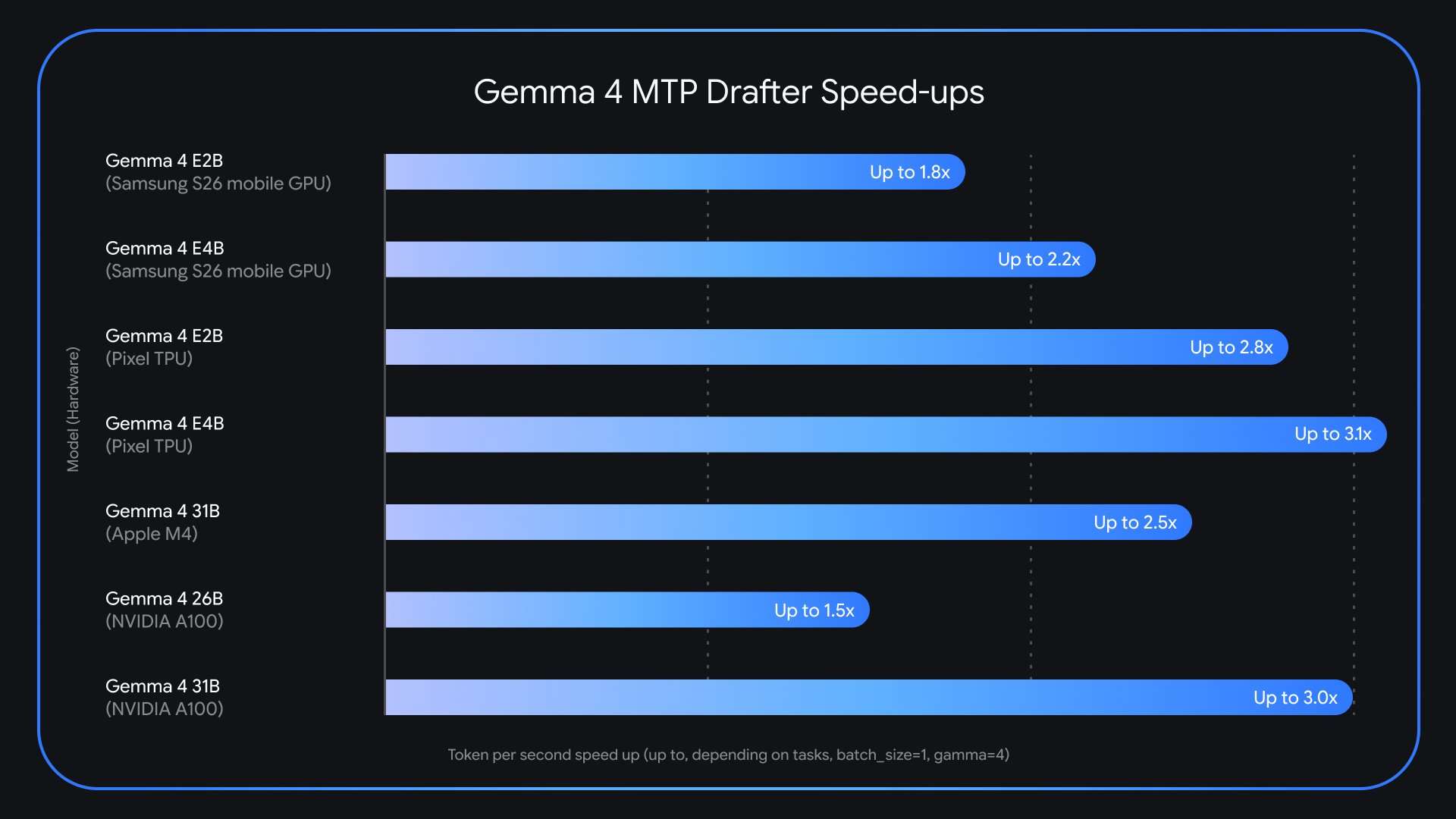
Google AI Releases Multi-Token Prediction (MTP) Drafters for Gemma 4: Delivering Up to 3x Faster Inference Without Quality Loss
MarkTechPost
When Claude Hallucinates in Court: The Latham & Watkins Incident and What It Means for Attorney Liability
MarkTechPost
Solidity LM surpasses Opus
Reddit r/LocalLLaMA


