
BioAlchemy: Distilling Biological Literature into Reasoning-Ready Reinforcement Learning Training Data
arXiv cs.AI / 4/7/2026
📰 NewsSignals & Early TrendsIdeas & Deep AnalysisModels & Research
Key Points
- The paper argues that existing large-scale reasoning datasets for biology have poor alignment with current biological research topic distributions, which can hurt reasoning model performance on biology tasks.
- It introduces BioAlchemy, a pipeline to extract diverse, verifiable biology question-answer pairs from biological research literature for reinforcement learning use.
- The authors release BioAlchemy-345K, a dataset with 345K biology reasoning problems, and show that matching the dataset’s topic mix to modern biology improves reinforcement-learning outcomes.
- They also present BioAlchemist-8B, an 8B reasoning model variant that achieves a 9.12% improvement over its base model on biology benchmarks.
- The resulting model is made available on Hugging Face, enabling downstream researchers and teams to further build biology-focused reasoning systems.
Related Articles

Black Hat Asia
AI Business
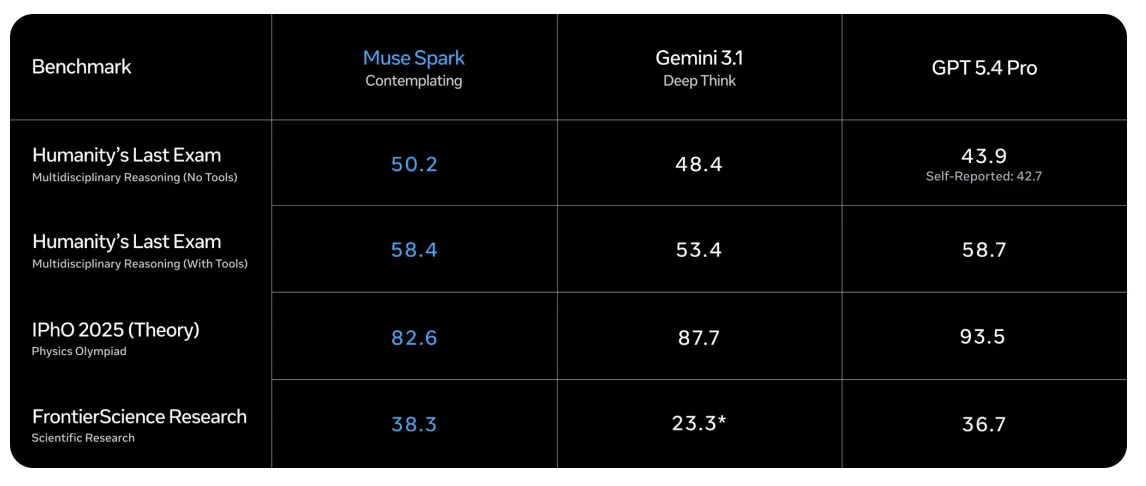
Meta Superintelligence Lab Releases Muse Spark: A Multimodal Reasoning Model With Thought Compression and Parallel Agents
MarkTechPost

Chatbots are great at manipulating people to buy stuff, Princeton boffins find
The Register
I tested and ranked every ai companion app I tried and here's my honest breakdown
Reddit r/artificial

Big Tech firms are accelerating AI investments and integration, while regulators and companies focus on safety and responsible adoption.
Dev.to


