
Joint Energy Management and Coordinated AIGC Workload Scheduling for Distributed Data Centers: A Diffusion-Aided Reward Shaping Approach
arXiv cs.LG / 5/6/2026
📰 NewsDeveloper Stack & InfrastructureIdeas & Deep AnalysisModels & Research
Key Points
- The paper proposes a joint framework for energy management and coordinated AIGC workload scheduling across distributed data centers to cut energy costs without sacrificing content generation quality.
- It explicitly models service quality to enable job transfers between ASPs and to support fine-grained control of inference processes, while jointly leveraging multiple energy resources for greater power flexibility.
- The authors formulate a system utility maximization problem that balances AIGC service revenue against operational penalties and energy-related costs.
- Because scheduling decisions are strongly coupled—causing sparse rewards that hinder standard deep reinforcement learning—the paper introduces a diffusion-model-aided reward shaping method that generates denser, complementary reward signals via multi-step denoising.
- Experiments using real-world models and datasets show improved learning convergence and higher overall system utility, including robustness to electricity price fluctuations and heterogeneity among AIGC models across ASPs.
Related Articles

Top 10 Free AI Tools for Students in 2026: The Ultimate Study Guide
Dev.to

SIFS (SIFS Is Fast Search) - local code search for coding agents
Dev.to

AI as Your Contingency Co-Pilot: Automating Wedding Day 'What-Ifs'
Dev.to
BizNode's semantic memory (Qdrant) makes your bot smarter over time — it remembers past conversations and answers...
Dev.to
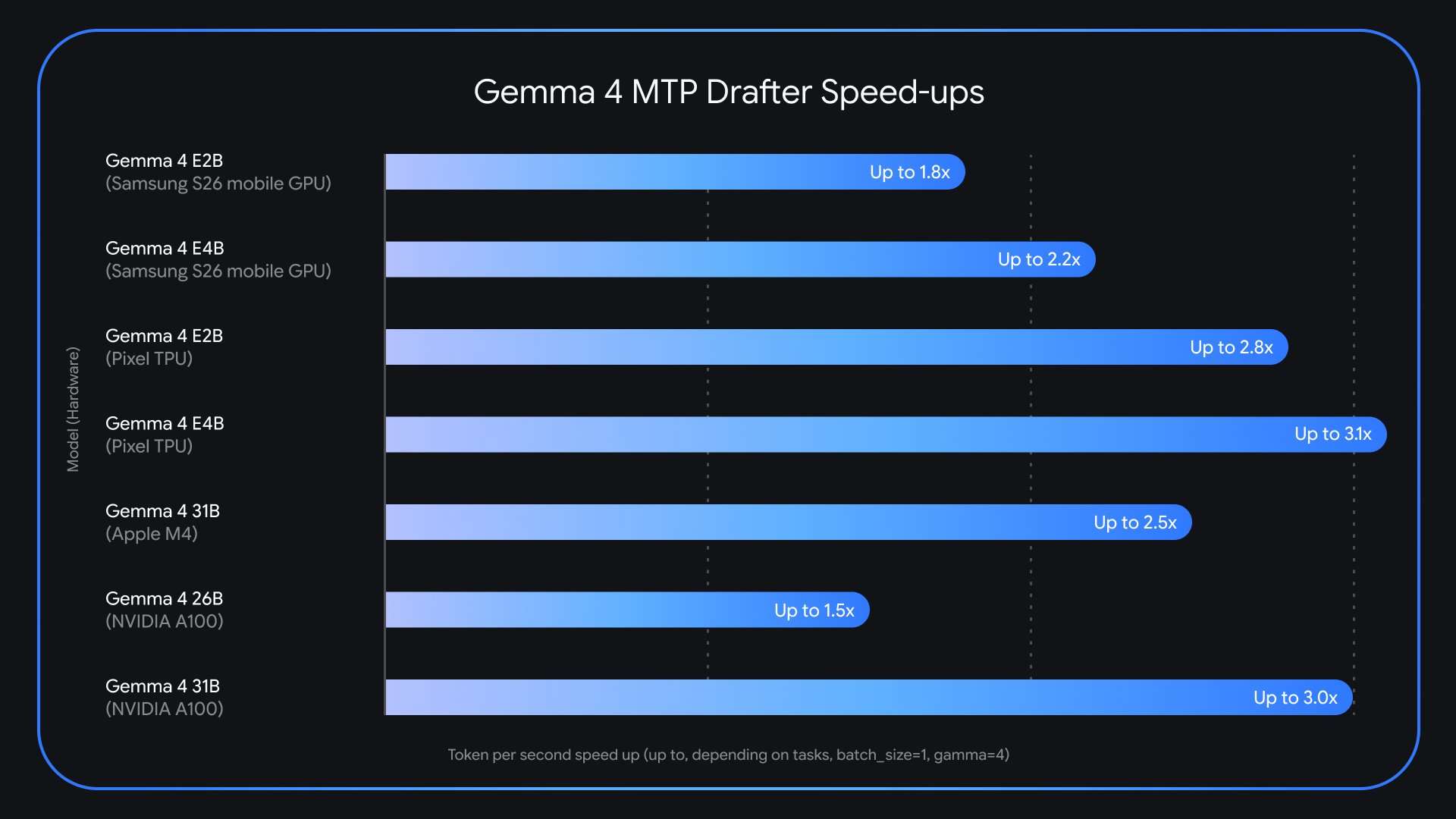
Google AI Releases Multi-Token Prediction (MTP) Drafters for Gemma 4: Delivering Up to 3x Faster Inference Without Quality Loss
MarkTechPost


