
A Unified Spatial Alignment Framework for Highly Transferable Transformation-Based Attacks on Spatially Structured Tasks
arXiv cs.CV / 3/27/2026
💬 OpinionSignals & Early TrendsIdeas & Deep AnalysisModels & Research
Key Points
- The paper notes that transformation-based adversarial attacks (TAAs) transfer well for image classification but can fail or perform poorly on spatially structured tasks like semantic segmentation and object detection.
- It argues that the root cause is spatial misalignment: for structured tasks, labels are spatially structured, so applying spatial transformations to inputs without synchronizing label transformations corrupts the training gradients.
- The authors propose a unified Spatial Alignment Framework (SAF) that spatially transforms labels synchronously with inputs via a Spatial Alignment (SA) algorithm to maintain alignment during attacks.
- Experiments show SAF is crucial for structured tasks, substantially reducing segmentation mIoU and detection mAP compared to attacks without the framework (e.g., Cityscapes mIoU 24.50→11.34; COCO mAP 17.89→5.25 in the paper’s reported comparisons).
広告
Related Articles
Got My 39-Agent System Audited Live. Here's What the Maturity Scorecard Revealed.
Dev.to
The Redline Economy
Dev.to
$500 GPU outperforms Claude Sonnet on coding benchmarks
Dev.to
From Scattershot to Sniper: AI for Hyper-Personalized Media Lists
Dev.to
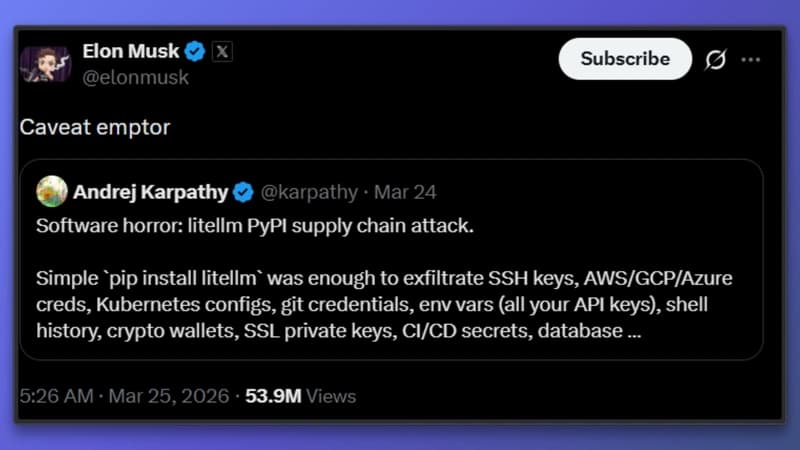
The LiteLLM Supply Chain Attack: A Wake-Up Call for AI Infrastructure
Dev.to


