
Cognition-Inspired Dual-Stream Semantic Enhancement for Vision-Based Dynamic Emotion Modeling
arXiv cs.CV / 4/15/2026
💬 OpinionSignals & Early TrendsIdeas & Deep AnalysisModels & Research
Key Points
- The paper proposes a cognition-inspired dual-stream model (DuSE) to improve vision-based dynamic emotion modeling by explicitly incorporating brain-inspired semantic and contextual processing mechanisms.
- DuSE uses two components: a Hierarchical Temporal Prompt Cluster (HTPC) to simulate cognitive priming that aligns linguistic semantics with temporal facial dynamics, and a Latent Semantic Emotion Aggregator (LSEA) to integrate sensory cues with learned conceptual knowledge.
- The method is designed to enhance dynamic facial expression recognition (DFER) by addressing limitations in existing approaches that often ignore emotion perception and cognitive theories.
- Experiments on challenging in-the-wild benchmarks reportedly validate DuSE with state-of-the-art performance and improved interpretability relative to prior methods.
Related Articles

Black Hat Asia
AI Business

The Complete Guide to Better Meeting Productivity with AI Note-Taking
Dev.to

5 Ways Real-Time AI Can Boost Your Sales Call Performance
Dev.to
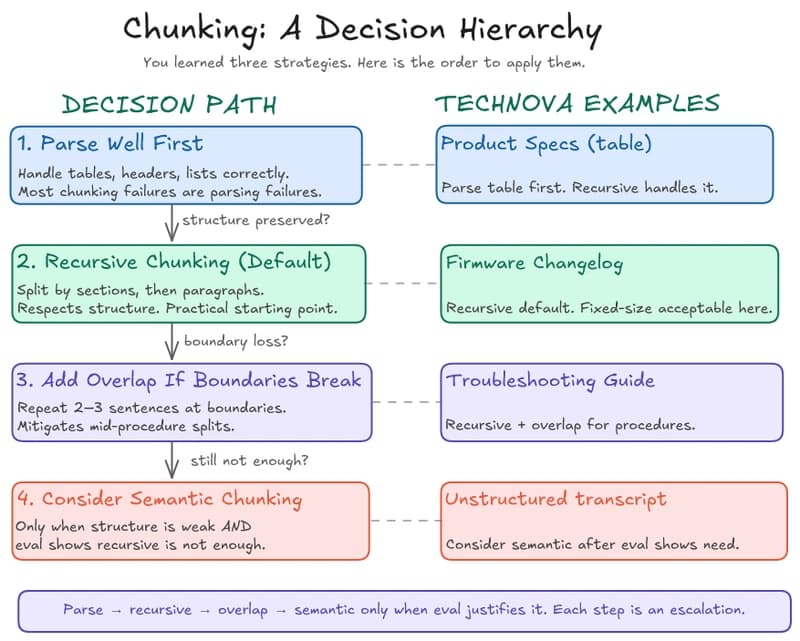
RAG in Practice — Part 4: Chunking, Retrieval, and the Decisions That Break RAG
Dev.to
Why dynamically routing multi-timescale advantages in PPO causes policy collapse (and a simple decoupled fix) [R]
Reddit r/MachineLearning


