
GraphPlanner: Graph Memory-Augmented Agentic Routing for Multi-Agent LLMs
arXiv cs.CL / 4/28/2026
📰 NewsDeveloper Stack & InfrastructureSignals & Early TrendsModels & Research
Key Points
- GraphPlanner is a new heterogeneous graph memory-augmented routing approach designed for agentic (multi-round, multi-agent) LLM systems, where it must handle task planning and memory use rather than simple one-shot model selection.
- It generates a per-query routing workflow by formulating the decision process as a Markov Decision Process (MDP), selecting both an LLM backbone and an agent role (Planner, Executor, Summarizer) at each step.
- Using a heterogeneous graph called GARNet, GraphPlanner captures interaction memories among queries, agents, and responses, and fuses historical and workflow memory into richer state representations.
- The full pipeline is optimized with reinforcement learning, and experiments on 14 diverse LLM tasks show up to a 9.3% accuracy improvement while drastically reducing GPU memory usage (from 186.26 GiB to 1.04 GiB).
- The method also demonstrates strong generalization (including robust zero-shot performance on unseen tasks/LLMs) and effective use of historical memories for both inductive and transductive inference.
Related Articles

Big Tech firms are accelerating AI investments and integration, while regulators and companies focus on safety and responsible adoption.
Dev.to
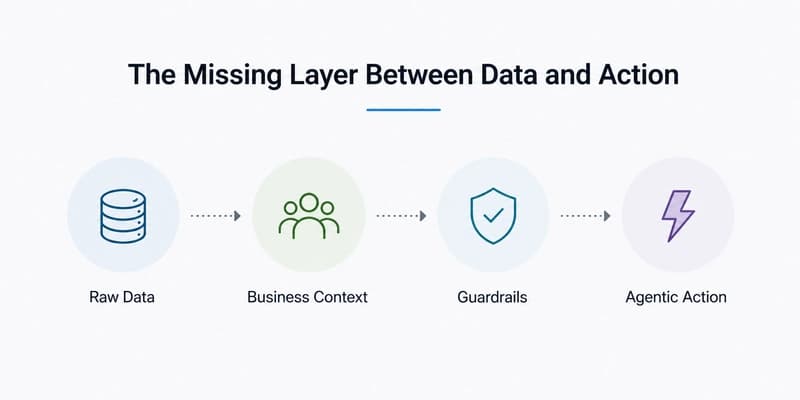
Everyone Wants AI Agents. Fewer Teams Are Ready for the Messy Business Context Behind Them
Dev.to
Free Registration & $20K Prize Pool: 2nd MLC-SLM Challenge 2026 on Multilingual Speech LLMs [N]
Reddit r/MachineLearning
How to Build Traceable and Evaluated LLM Workflows Using Promptflow, Prompty, and OpenAI
MarkTechPost
AI 编程工具对比 2026:Claude Code vs Cursor vs Gemini CLI vs Codex
Dev.to


