
Masked by Consensus: Disentangling Privileged Knowledge in LLM Correctness
arXiv cs.CL / 4/15/2026
💬 OpinionIdeas & Deep AnalysisModels & Research
Key Points
- The paper tests whether LLMs have “privileged” internal information about answer correctness that is not recoverable from externally observable signals.
- Experiments using correctness classifiers trained on a model’s own hidden states versus peer-model representations find no self-probing advantage on standard benchmarks.
- The authors hypothesize this null result is explained by high agreement among models on which answers are correct.
- On subsets where models disagree, they identify domain-specific privileged knowledge: self-representations improve factual knowledge accuracy but do not help math reasoning.
- Layer-wise analysis shows the factual advantage increases from early to mid layers, suggesting memory-retrieval differences, while math reasoning provides no consistent benefit at any depth.
Related Articles
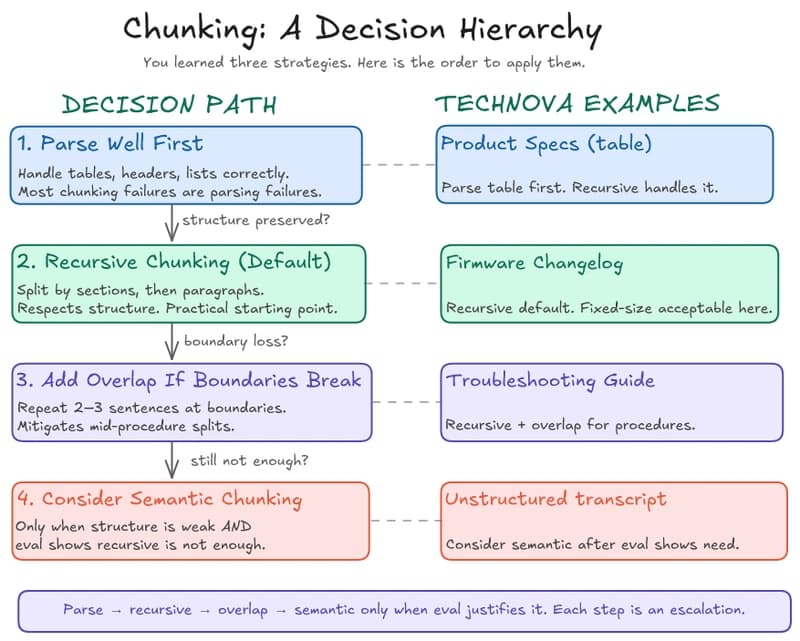
RAG in Practice — Part 4: Chunking, Retrieval, and the Decisions That Break RAG
Dev.to
Why dynamically routing multi-timescale advantages in PPO causes policy collapse (and a simple decoupled fix) [R]
Reddit r/MachineLearning

How AI Interview Assistants Are Changing Job Preparation in 2026
Dev.to

Consciousness in Artificial Intelligence: Insights from the Science ofConsciousness
Dev.to

NEW PROMPT INJECTION
Dev.to


