
R3D: Revisiting 3D Policy Learning
arXiv cs.CV / 4/17/2026
📰 NewsModels & Research
Key Points
- The paper revisits 3D policy learning, aiming to enable stronger generalization and cross-embodiment transfer that has been blocked by training instability and severe overfitting.
- The authors diagnose the core failure modes and conclude that missing 3D data augmentation and the negative effects of Batch Normalization are key contributors.
- They introduce a new architecture that combines a scalable transformer-based 3D encoder with a diffusion decoder, with design choices focused on stability and scalability.
- Experiments show substantial improvements over existing 3D baselines on difficult manipulation benchmarks, helping establish a more robust foundation for scalable 3D imitation learning.
Related Articles
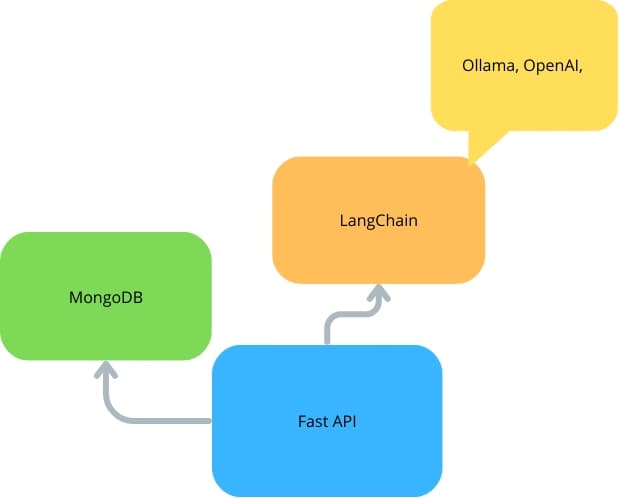
FastAPI With LangChain and MongoDB
Dev.to
![[2026] OpenTelemetry for LLM Observability — Self-Hosted Setup](/_next/image?url=https%3A%2F%2Fmedia2.dev.to%2Fdynamic%2Fimage%2Fwidth%3D1200%2Cheight%3D627%2Cfit%3Dcover%2Cgravity%3Dauto%2Cformat%3Dauto%2Fhttps%253A%252F%252Fdev-to-uploads.s3.amazonaws.com%252Fuploads%252Farticles%252Flu4b6ttuhur71z5gemm0.png&w=3840&q=75)
[2026] OpenTelemetry for LLM Observability — Self-Hosted Setup
Dev.to
The AI Education Product on Product Hunt Worth Watching
Dev.to

The joy and pain of training an LLM from scratch
Reddit r/LocalLLaMA

Did you know that you can use Qwen3.5-35B-A3B-Base as an instruction/reasoning Model?
Reddit r/LocalLLaMA


