
Evaluating Artificial Intelligence Through a Christian Understanding of Human Flourishing
arXiv cs.AI / 4/7/2026
💬 OpinionSignals & Early TrendsIdeas & Deep AnalysisModels & Research
Key Points
- The paper argues that AI alignment should be treated as a formative “formation problem,” because LLMs increasingly mediate moral and spiritual deliberation rather than only supplying information.
- It introduces the Flourishing AI Benchmark (Christian Single-Turn, FAI-C-ST), which evaluates frontier model outputs against a Christian framework of human flourishing across seven dimensions.
- In tests comparing 20 frontier models to both pluralistic and Christian-specific criteria, the authors find models are not worldview-neutral and tend to default to “Procedural Secularism.”
- The study reports an average performance decline of about 17 points across flourishing dimensions when applying Christian coherence criteria, with the largest drop (about 31 points) in “Faith and Spirituality.”
- The authors conclude the gap is not merely a technical shortcoming but is linked to training objectives that emphasize general acceptability and safety over deep, internally coherent moral/theological reasoning.
Related Articles

Black Hat Asia
AI Business
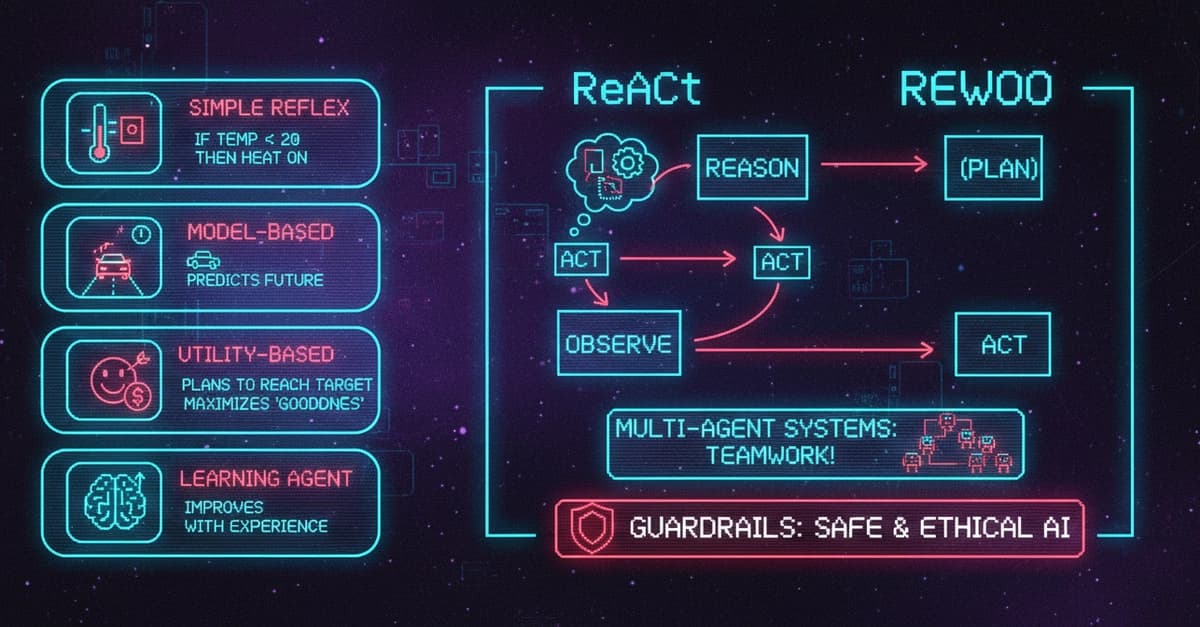
AI Agents Explained: 5 Types, Components, Frameworks, and Real-World Use Cases
Dev.to

Edge-to-Cloud Swarm Coordination for circular manufacturing supply chains with embodied agent feedback loops
Dev.to

Why QIS Is Not a Sync Problem: The Mailbox Model for Distributed Intelligence
Dev.to

The Ethics of AI: A Developer's Responsibility
Dev.to


