
MIRANDA: MId-feature RANk-adversarial Domain Adaptation toward climate change-robust ecological forecasting with deep learning
arXiv cs.LG / 4/2/2026
📰 NewsSignals & Early TrendsIdeas & Deep AnalysisModels & Research
Key Points
- The paper introduces MIRANDA, a mid-feature rank-adversarial domain adaptation method aimed at making deep-learning plant phenology forecasts more robust to climate-change-induced distribution shifts.
- It argues that typical domain adaptation falls short for climate change because domain changes occur along a temporal continuum and involve both covariate shift and label shift (e.g., warmer records and earlier spring).
- MIRANDA addresses this by applying adversarial regularization to intermediate (mid-level) features rather than only enforcing invariance on the final latent representation.
- The method uses a rank-based objective to enforce year-invariance in meteorological representations, explicitly targeting temporal domain structure.
- Experiments on a country-scale 70-year dataset (67,800 observations across 5 tree species) show improved robustness to climatic shifts and a reduced performance gap versus mechanistic models.
Related Articles

Black Hat Asia
AI Business
v5.5.0
Transformers(HuggingFace)Releases
Bonsai (PrismML's 1 bit version of Qwen3 8B 4B 1.7B) was not an aprils fools joke
Reddit r/LocalLLaMA

Big Tech firms are accelerating AI investments and integration, while regulators and companies focus on safety and responsible adoption.
Dev.to
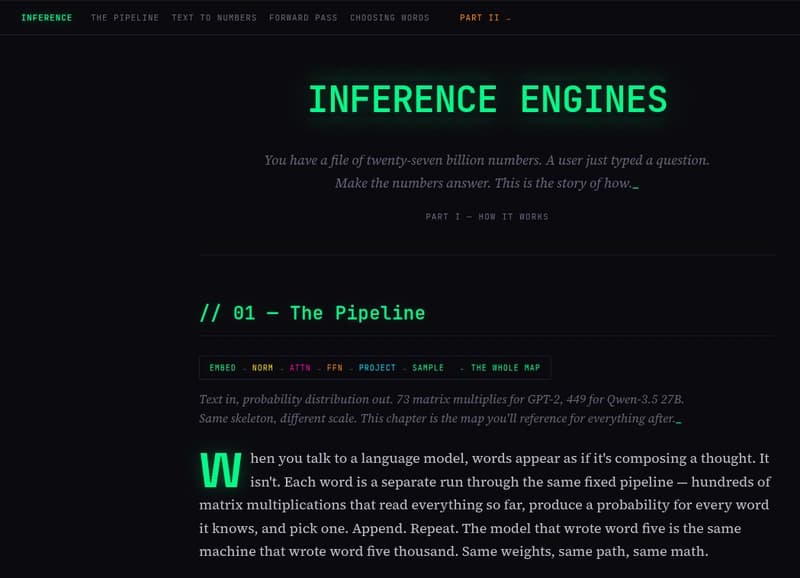
Inference Engines - A visual deep dive into the layers of an LLM
Dev.to


