
GlobalSplat: Efficient Feed-Forward 3D Gaussian Splatting via Global Scene Tokens
arXiv cs.CV / 4/17/2026
📰 NewsModels & Research
Key Points
- GlobalSplat targets a core bottleneck in 3D Gaussian Splatting: efficient primitive allocation that balances compact representation size, fast reconstruction, and high rendering fidelity.
- The paper argues that prior feed-forward methods rely on local, alignment-driven heuristics (often pixel/voxel aligned), which introduces redundancy and makes global consistency fragile as more views are used.
- GlobalSplat uses an “align first, decode later” design by learning a compact global latent scene representation that encodes multi-view inputs and resolves cross-view correspondences before any explicit 3D geometry is decoded.
- A coarse-to-fine training curriculum that increases decoded capacity gradually helps prevent representation “bloat,” and the method avoids dependence on pretrained pixel-prediction backbones or dense baseline feature reuse.
- Experiments on RealEstate10K and ACID show competitive novel-view synthesis with as few as 16K Gaussians (about a 4MB footprint) and fast inference of ~78 ms per single forward pass versus baseline approaches.
Related Articles
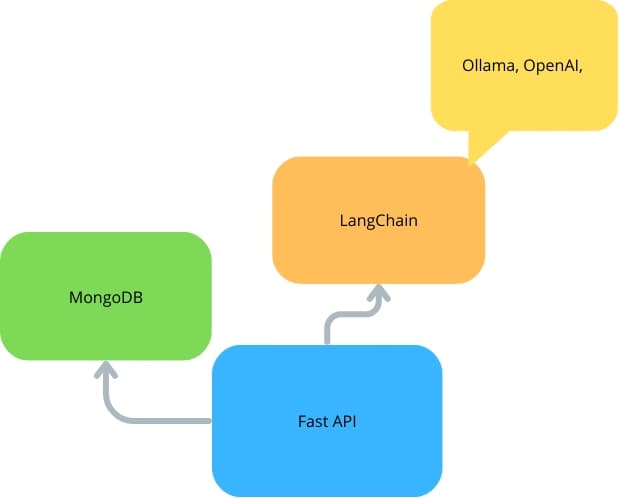
FastAPI With LangChain and MongoDB
Dev.to
![[2026] OpenTelemetry for LLM Observability — Self-Hosted Setup](/_next/image?url=https%3A%2F%2Fmedia2.dev.to%2Fdynamic%2Fimage%2Fwidth%3D1200%2Cheight%3D627%2Cfit%3Dcover%2Cgravity%3Dauto%2Cformat%3Dauto%2Fhttps%253A%252F%252Fdev-to-uploads.s3.amazonaws.com%252Fuploads%252Farticles%252Flu4b6ttuhur71z5gemm0.png&w=3840&q=75)
[2026] OpenTelemetry for LLM Observability — Self-Hosted Setup
Dev.to
The AI Education Product on Product Hunt Worth Watching
Dev.to

The joy and pain of training an LLM from scratch
Reddit r/LocalLLaMA

Did you know that you can use Qwen3.5-35B-A3B-Base as an instruction/reasoning Model?
Reddit r/LocalLLaMA


