
Tug-of-War within A Decade: Conflict Resolution in Vulnerability Analysis via Teacher-Guided Retrieval-Augmented Generations
arXiv cs.CL / 4/17/2026
📰 NewsDeveloper Stack & InfrastructureModels & Research
Key Points
- The paper argues that rapidly changing cybersecurity vulnerability information (e.g., CVE updates) creates knowledge discrepancies and conflicts that can cause hallucinations and incorrect facts in LLM-based vulnerability analysis.
- It introduces a two-stage framework, CRVA-TGRAG, combining improved CVE document retrieval with a generation-time LLM fine-tuning approach.
- For retrieval, the method uses Parent Document Segmentation plus an ensemble strategy that blends semantic similarity search with inverted indexing to better locate the latest CVE knowledge.
- For generation, it applies teacher-guided preference optimization to fine-tune the LLM using CVE retrieval results, aiming to produce more accurate answers.
- Experiments on retrieving the latest CVEs show improved accuracy over using external knowledge bases alone, and the approach reduces knowledge conflicts from relying solely on LLM internal knowledge.
Related Articles
langchain-anthropic==1.4.1
LangChain Releases
Stop burning tokens on DOM noise: a Playwright MCP optimizer layer
Dev.to
Talk to Your Favorite Game Characters! Mantella Brings AI to Skyrim and Fallout 4 NPCs
Dev.to
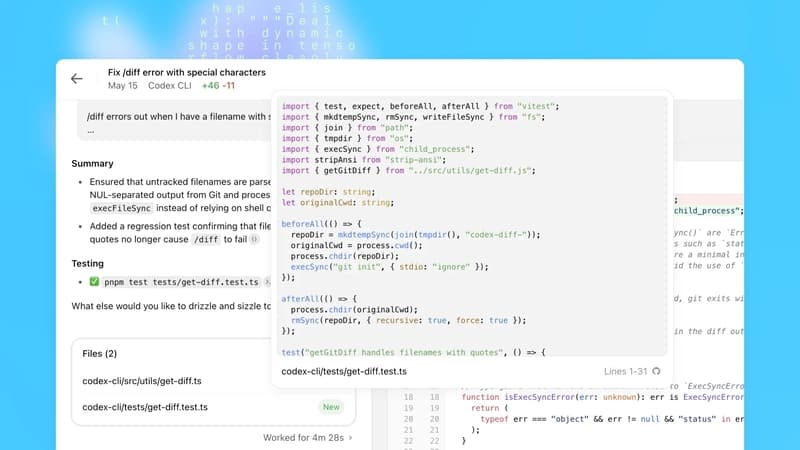
OpenAI Codex Update Adds macOS Agent, Browser, Memory; 3M Weekly Users
Dev.to

How Data Science Is Used to Predict User BeReducing Human Error in Compliance With AI Technology havior
Dev.to


