
GRIFDIR: Graph Resolution-Invariant FEM Diffusion Models in Function Spaces over Irregular Domains
arXiv cs.LG / 5/6/2026
📰 NewsDeveloper Stack & InfrastructureIdeas & Deep AnalysisModels & Research
Key Points
- The paper introduces GRIFDIR, a new score-based diffusion model designed to work in infinite-dimensional function spaces for function-valued data.
- It addresses limitations in existing neural-operator backbones (e.g., Fourier neural operators) that are biased toward regular grids and struggle with irregular domain topology.
- GRIFDIR uses finite-element representations of generalized graph convolution kernels to better handle unstructured meshes and complex geometries.
- The authors validate the approach with unconditional and conditional sampling experiments on a range of domains, including non-convex and multiply-connected shapes.
- Results indicate the method preserves resolution invariance while achieving high-fidelity modeling of functional distributions on challenging, non-trivial geometries.
Related Articles

Top 10 Free AI Tools for Students in 2026: The Ultimate Study Guide
Dev.to

SIFS (SIFS Is Fast Search) - local code search for coding agents
Dev.to

AI as Your Contingency Co-Pilot: Automating Wedding Day 'What-Ifs'
Dev.to

BizNode's semantic memory (Qdrant) makes your bot smarter over time — it remembers past conversations and answers...
Dev.to
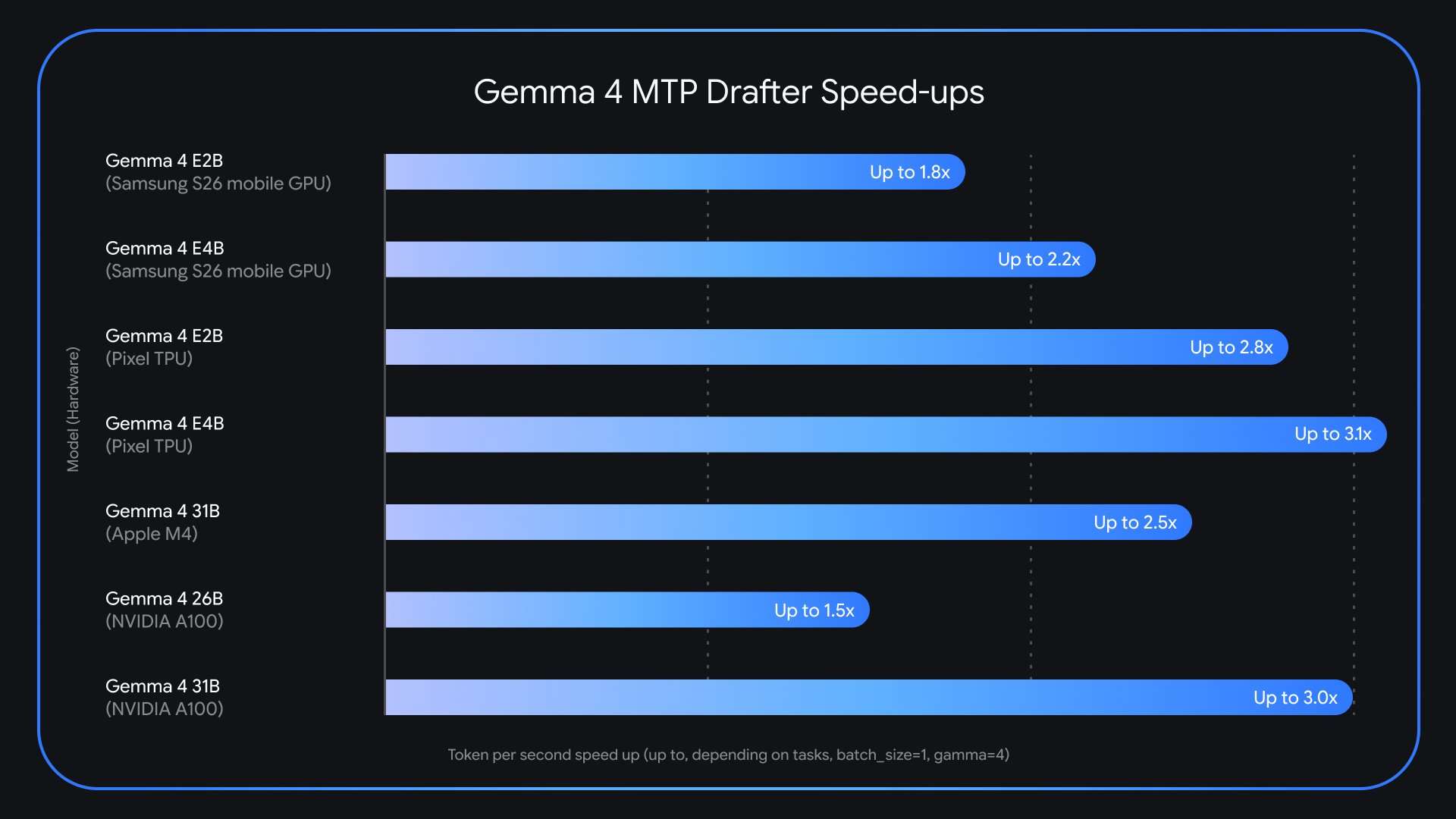
Google AI Releases Multi-Token Prediction (MTP) Drafters for Gemma 4: Delivering Up to 3x Faster Inference Without Quality Loss
MarkTechPost


