
Frege in the Flesh: Biolinguistics and the Neural Enforcement of Syntactic Structures
arXiv cs.CL / 4/3/2026
💬 OpinionSignals & Early TrendsIdeas & Deep AnalysisModels & Research
Key Points
- The paper presents a biolinguistics-focused view of language as an innate biological faculty, emphasizing the internal computational system that generates hierarchically structured syntax rather than speech or general sequence processing.
- It argues that treating MERGE (the syntax structure-building operation) as a “real joint of nature” can guide evolutionary explanation by implying concrete standards for what counts as an adequate scientific account of syntax.
- It claims that a sufficiently explicit algebraic model of syntax can impose non-trivial constraints on plausible neural mechanisms responsible for syntactic structure formation.
- The author reviews how recent neurocomputational work may turn these theoretical constraints into testable empirical hypotheses, while stressing the speculative and revisable nature of the program.
Related Articles

Black Hat Asia
AI Business

90000 Tech Workers Got Fired This Year and Everyone Is Blaming AI but Thats Not the Whole Story
Dev.to

Microsoft’s $10 Billion Japan Bet Shows the Next AI Battleground Is National Infrastructure
Dev.to
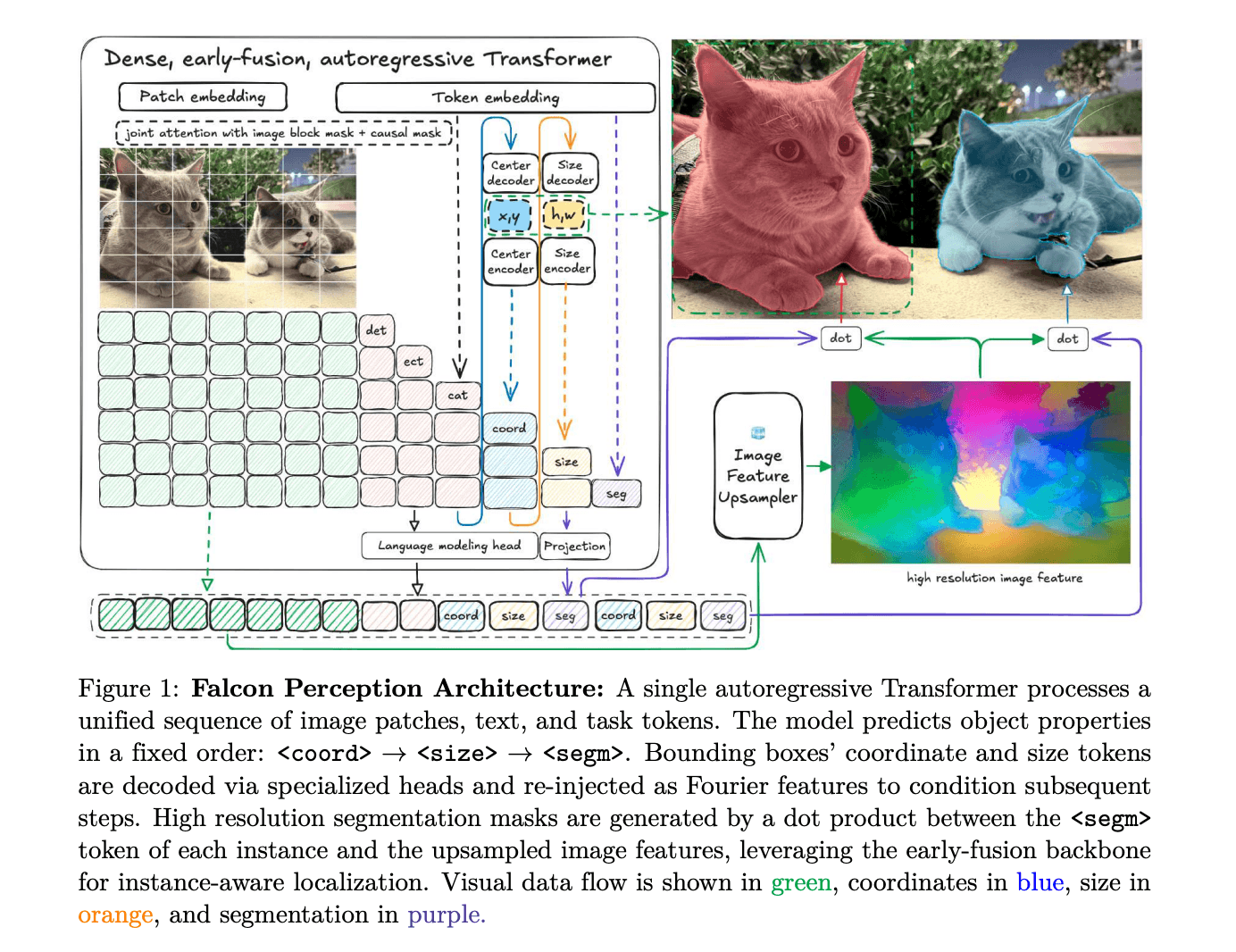
TII Releases Falcon Perception: A 0.6B-Parameter Early-Fusion Transformer for Open-Vocabulary Grounding and Segmentation from Natural Language Prompts
MarkTechPost

Portable eye scanner powered by AI expands access to low-cost community screening
Reddit r/artificial


