
SteerFlow: Steering Rectified Flows for Faithful Inversion-Based Image Editing
arXiv cs.CV / 4/3/2026
💬 OpinionIdeas & Deep AnalysisModels & Research
Key Points
- The paper proposes SteerFlow, a model-agnostic framework for faithful inversion-based, text-guided image editing that improves source fidelity over existing approaches.
- SteerFlow’s forward stage uses an Amortized Fixed-Point Solver to straighten the generative trajectory by enforcing velocity consistency across timesteps, producing a higher-fidelity inverted latent.
- Its backward stage introduces Trajectory Interpolation, adaptively blending editing and source-reconstruction velocities to keep edits anchored to the original image and reduce drift.
- To better preserve backgrounds, SteerFlow adds Adaptive Masking that spatially constrains the editing signal using concept-guided segmentation and velocity differences between source and target.
- Experiments on FLUX.1-dev and Stable Diffusion 3.5 Medium report consistently better editing quality than prior methods and show support for multi-turn editing without accumulating drift.
Related Articles

90000 Tech Workers Got Fired This Year and Everyone Is Blaming AI but Thats Not the Whole Story
Dev.to

Microsoft’s $10 Billion Japan Bet Shows the Next AI Battleground Is National Infrastructure
Dev.to
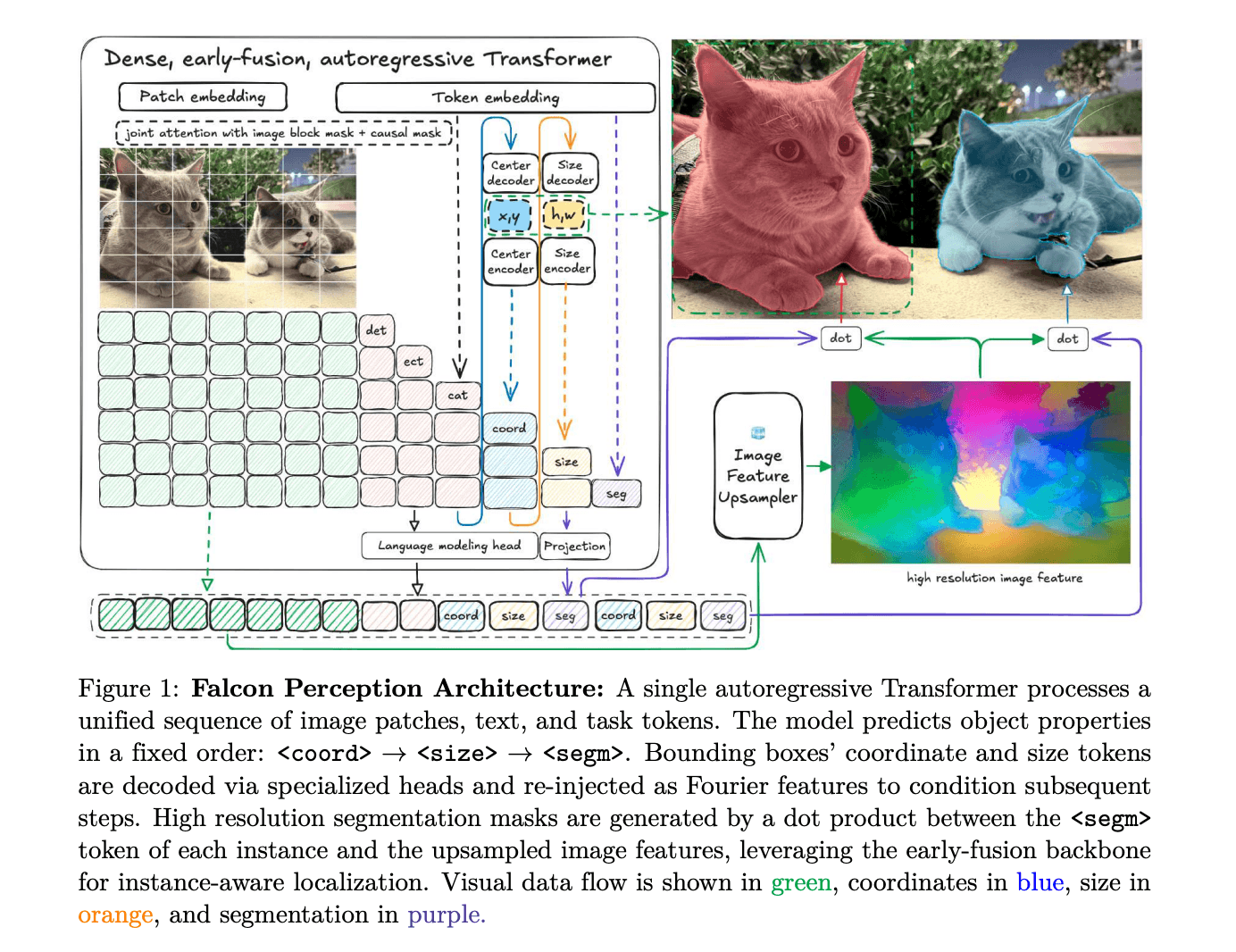
TII Releases Falcon Perception: A 0.6B-Parameter Early-Fusion Transformer for Open-Vocabulary Grounding and Segmentation from Natural Language Prompts
MarkTechPost

The house asked me a question
Dev.to

Precision Clip Selection: How AI Suggests Your In and Out Points
Dev.to


