
Diffusion Model for Manifold Data: Score Decomposition, Curvature, and Statistical Complexity
arXiv cs.LG / 3/24/2026
💬 OpinionIdeas & Deep AnalysisModels & Research
Key Points
- The paper advances theoretical understanding of diffusion models for high-dimensional data that effectively lies on a lower-dimensional smooth Riemannian manifold.
- It analyzes how diffusion models decompose the score function across different noise injection regimes and how manifold curvature shapes that score structure.
- By leveraging these geometric insights, the authors argue for an efficient neural network approximation of the score function.
- The work derives statistical rates for both score estimation and distribution learning, showing that performance depends on intrinsic data dimension and manifold curvature.
- Overall, the study aims to bridge diffusion-model theory with practical learning behavior for generative modeling on manifold-structured data.
Related Articles
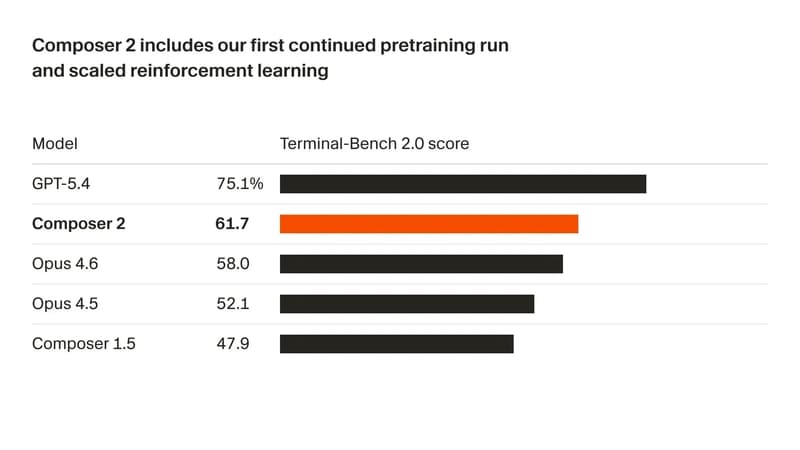
Composer 2: What is new and Compares with Claude Opus 4.6 & GPT-5.4
Dev.to
How UCP Breaks Your E-Commerce Tracking Stack: A Platform-by-Platform Analysis
Dev.to
AI Text Analyzer vs Asking Friends: Which Gives Better Perspective?
Dev.to
[D] Cathie wood claims ai productivity wave is starting, data shows 43% of ceos save 8+ hours weekly
Reddit r/MachineLearning

Microsoft hires top AI researchers from Allen Institute for AI for Suleyman's Superintelligence team
THE DECODER


