
A Context Engineering Framework for Improving Enterprise AI Agents based on Digital-Twin MDP
arXiv cs.AI / 3/24/2026
💬 OpinionSignals & Early TrendsIdeas & Deep AnalysisModels & Research
Key Points
- The paper proposes DT-MDP-CE, a lightweight, model-agnostic framework to improve LLM-based enterprise AI agents using offline reinforcement learning when real-world data and feedback are limited.
- It introduces a Digital-Twin Markov Decision Process (DT-MDP) to abstract an agent’s reasoning behavior as a finite MDP, enabling reward learning without requiring direct environment interaction.
- A robust contrastive inverse RL component uses DT-MDP to estimate a reliable reward function from mixed-quality offline trajectories and then derive policies.
- The framework adds RL-guided context engineering that leverages the learned policy to refine the agent’s decision-making behavior over time.
- In an enterprise IT automation case study, experiments show consistent, significant gains over baseline agents across multiple evaluation settings, suggesting the approach may generalize to similar enterprise agents.
Related Articles
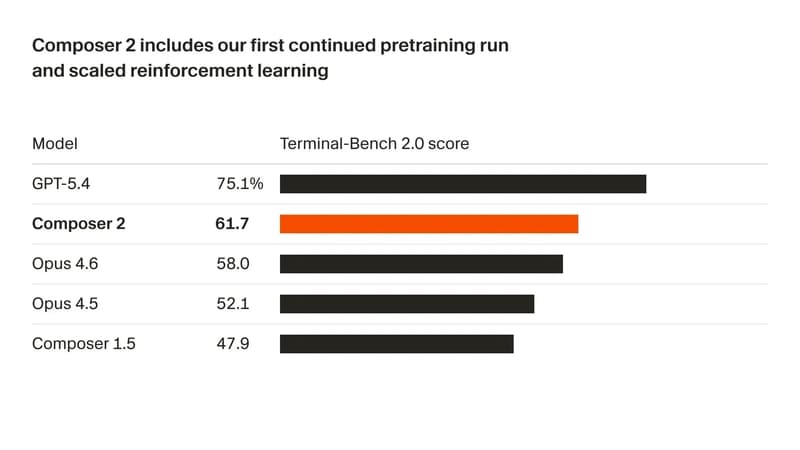
Composer 2: What is new and Compares with Claude Opus 4.6 & GPT-5.4
Dev.to
How UCP Breaks Your E-Commerce Tracking Stack: A Platform-by-Platform Analysis
Dev.to
AI Text Analyzer vs Asking Friends: Which Gives Better Perspective?
Dev.to
[D] Cathie wood claims ai productivity wave is starting, data shows 43% of ceos save 8+ hours weekly
Reddit r/MachineLearning

Microsoft hires top AI researchers from Allen Institute for AI for Suleyman's Superintelligence team
THE DECODER


