
A hierarchical spatial-aware algorithm with efficient reinforcement learning for human-robot task planning and allocation in production
arXiv cs.AI / 4/15/2026
💬 OpinionSignals & Early TrendsIdeas & Deep AnalysisModels & Research
Key Points
- The paper targets human-robot task planning and allocation (TPA) in advanced manufacturing, where spatial factors like real-time human position and travel distance make TPA difficult in dynamic environments.
- It decomposes production work into sequential subtasks and uses a hierarchical approach with a high-level planner plus a low-level allocator.
- For high-level planning, it proposes an efficient buffer-based deep Q-learning (EBQ) method intended to cut training time and better handle long-term, sparse rewards.
- For low-level allocation, it introduces a spatially aware path-planning method (SAP) to assign tasks to the right human-robot resources based on navigation feasibility and sequencing.
- Experiments in a complex 3D real-time production simulator show that the combined EBQ&SAP approach can effectively solve TPA under complex and dynamic conditions.
Related Articles

Black Hat Asia
AI Business

The Complete Guide to Better Meeting Productivity with AI Note-Taking
Dev.to

5 Ways Real-Time AI Can Boost Your Sales Call Performance
Dev.to
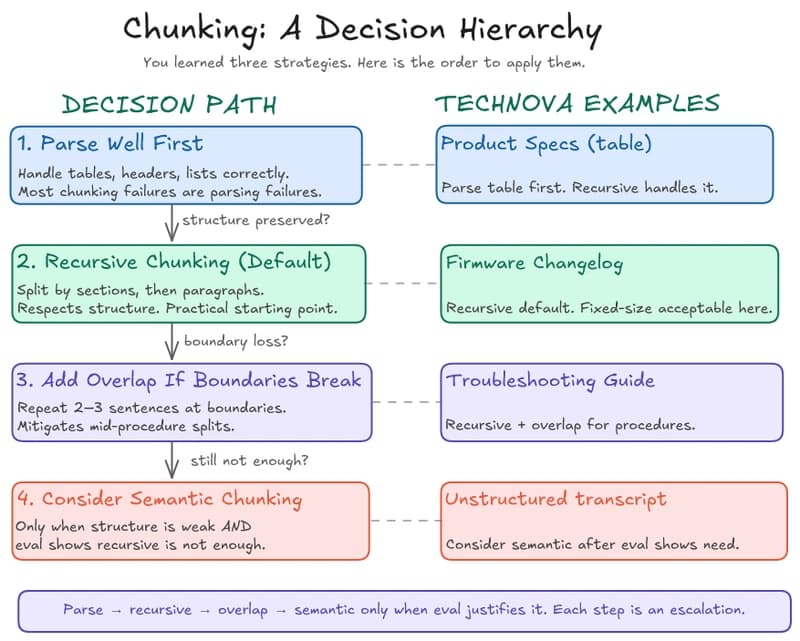
RAG in Practice — Part 4: Chunking, Retrieval, and the Decisions That Break RAG
Dev.to
Why dynamically routing multi-timescale advantages in PPO causes policy collapse (and a simple decoupled fix) [R]
Reddit r/MachineLearning


