
Prototype-Based Low Altitude UAV Semantic Segmentation
arXiv cs.CV / 4/3/2026
💬 OpinionSignals & Early TrendsIdeas & Deep AnalysisModels & Research
Key Points
- The paper proposes PBSeg, a prototype-based semantic segmentation framework specifically designed for low-altitude UAV imagery where scale variation and fine object boundaries are difficult under edge-device compute constraints.
- It introduces prototype-based cross-attention (PBCA) to leverage feature redundancy and reduce computational complexity while aiming to preserve segmentation quality.
- PBSeg uses an efficient multi-scale feature extraction module that combines deformable convolutions (DConv) with context-aware modulation (CAM) to capture both local details and global semantics.
- Experiments on UAVid and UDD6 show strong results, reaching 71.86% mIoU on UAVid and 80.92% mIoU on UDD6, indicating competitive accuracy with improved efficiency.
- The authors provide implementation code via GitHub, enabling researchers and developers to reproduce and build upon the method.
Related Articles

Black Hat Asia
AI Business

90000 Tech Workers Got Fired This Year and Everyone Is Blaming AI but Thats Not the Whole Story
Dev.to

Microsoft’s $10 Billion Japan Bet Shows the Next AI Battleground Is National Infrastructure
Dev.to
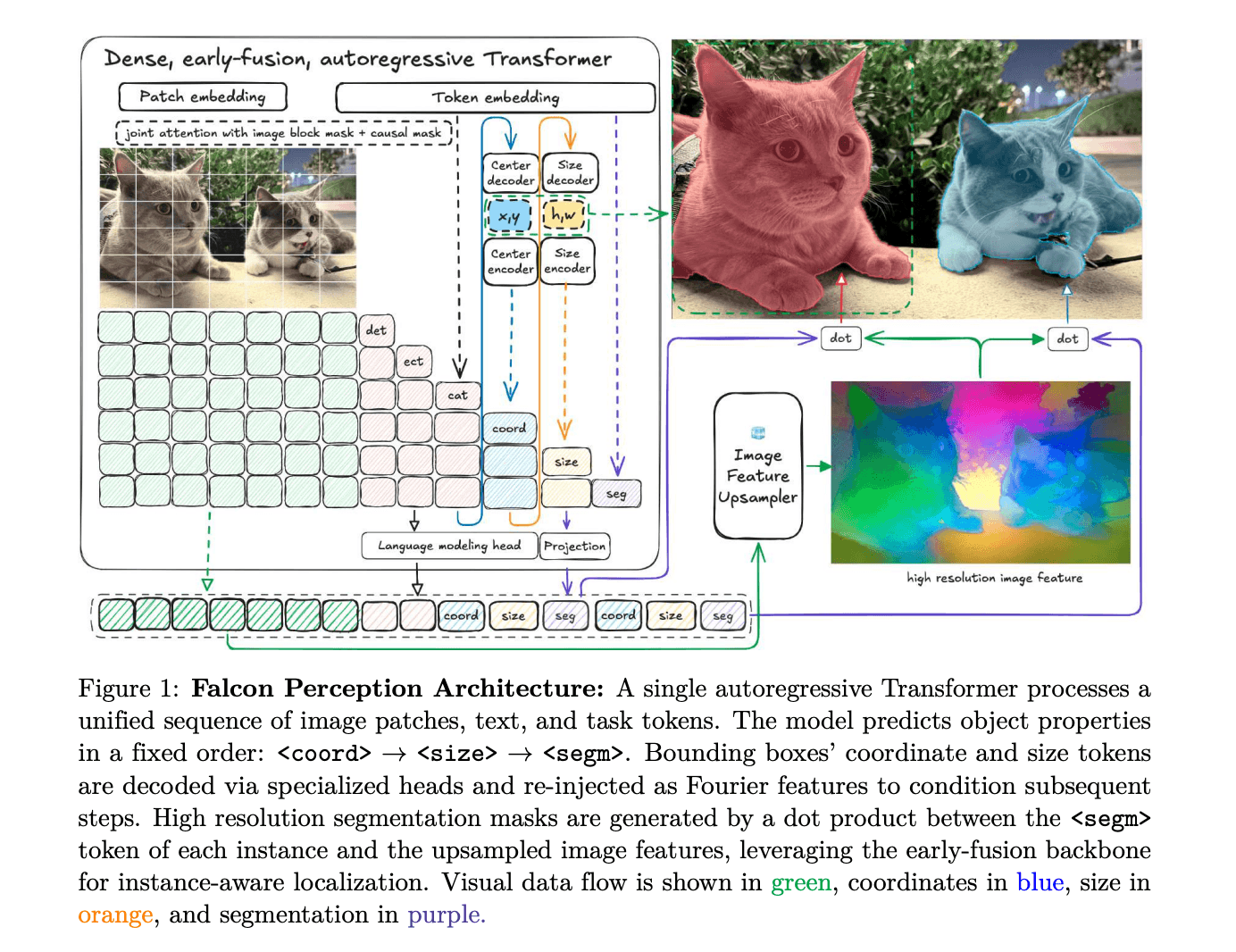
TII Releases Falcon Perception: A 0.6B-Parameter Early-Fusion Transformer for Open-Vocabulary Grounding and Segmentation from Natural Language Prompts
MarkTechPost

Portable eye scanner powered by AI expands access to low-cost community screening
Reddit r/artificial


