
Information Extraction from Electricity Invoices with General-Purpose Large Language Models
arXiv cs.CL / 4/30/2026
💬 OpinionIdeas & Deep AnalysisTools & Practical UsageModels & Research
Key Points
- The study benchmarks general-purpose LLMs (Gemini 1.5 Pro and Mistral-small) for extracting structured data from semi-structured Spanish electricity invoices without task-specific fine-tuning.
- By varying 19 parameter configurations and 6 prompting strategies on a subset of the IDSEM dataset, the researchers treat prompt engineering as the main experimental variable.
- Results show prompt quality outweighs hyperparameter tuning: F1 differences across configurations are small, while the best few-shot methods outperform zero-shot by more than 19 percentage points.
- The top approach (few-shot with cross-validation) reaches very high F1-scores—97.61% for Gemini and 96.11% for Mistral-small—suggesting that invoice template structure is the biggest factor affecting extraction difficulty.
- The paper provides an empirical framework indicating that careful prompt design is the key lever for improving fidelity in LLM-based business document automation.
Related Articles

Black Hat USA
AI Business
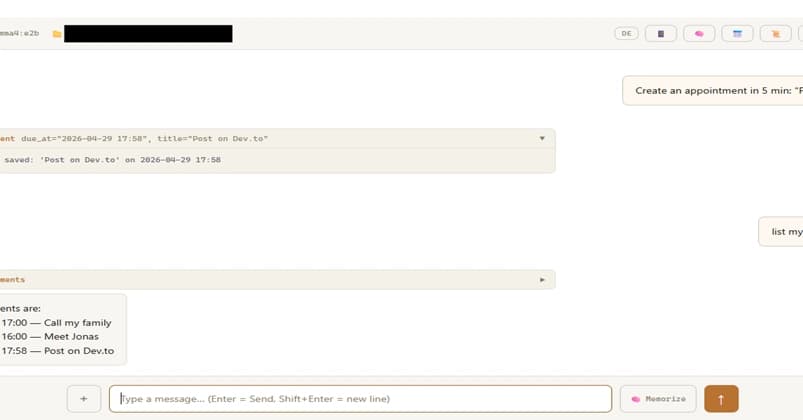
Building a Local AI Agent (Part 2): Six UX and UI Design Challenges
Dev.to
The Prompt Caching Mistake That's Costing You 70% More Than You Need to Pay
Dev.to
We Built a DNS-Based Discovery Protocol for AI Agents — Here's How It Works
Dev.to
Your first business opportunity in 3 commands: /register_directory in @biznode_bot, wait for matches, then /my_pulse to view...
Dev.to


