
PriorNet: Prior-Guided Engagement Estimation from Face Video
arXiv cs.CV / 5/6/2026
📰 NewsIdeas & Deep AnalysisModels & Research
Key Points
- PriorNet addresses the difficulty of engagement estimation from face video by explicitly handling incomplete facial evidence and subjective/limited labels.
- The framework injects task-relevant priors across three stages: preprocessing (using zero-frame placeholders when face detection fails), model adaptation, and objective design.
- It adapts a frozen self-supervised video facial affect backbone (SVFAP) using Prior-guided Low-Rank Adaptation (Prior-LoRA) for parameter-efficient specialization.
- PriorNet trains with a Dirichlet-evidential, uncertainty-weighted loss under hard-label supervision to better account for uncertainty.
- Experiments on EngageNet, DAiSEE, DREAMS, and PAFE show consistent improvements over prior references, and ablations suggest gains come from complementary preprocessing, adaptation, and objective priors.
Related Articles

Top 10 Free AI Tools for Students in 2026: The Ultimate Study Guide
Dev.to

AI as Your Contingency Co-Pilot: Automating Wedding Day 'What-Ifs'
Dev.to
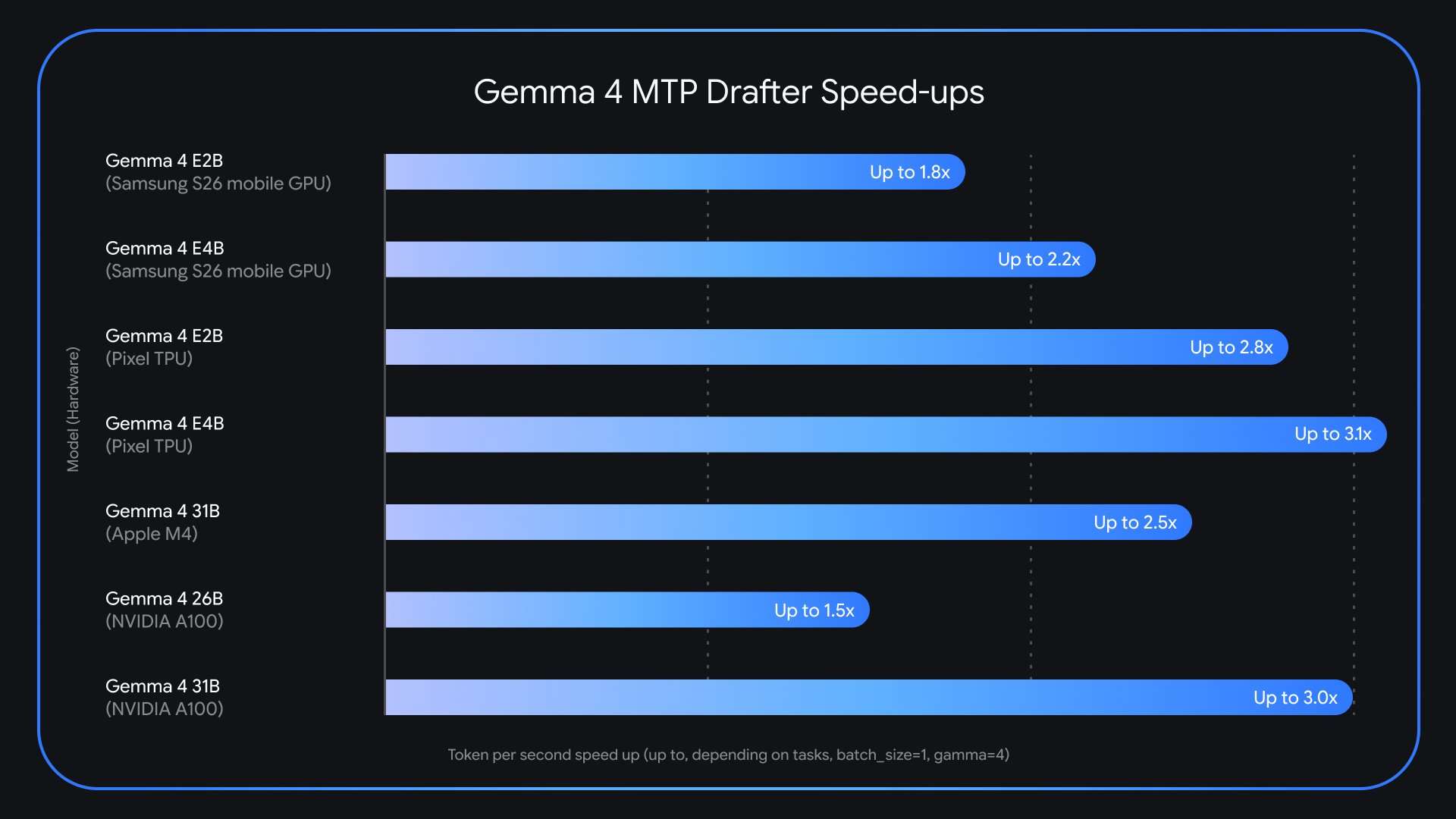
Google AI Releases Multi-Token Prediction (MTP) Drafters for Gemma 4: Delivering Up to 3x Faster Inference Without Quality Loss
MarkTechPost
When Claude Hallucinates in Court: The Latham & Watkins Incident and What It Means for Attorney Liability
MarkTechPost
Solidity LM surpasses Opus
Reddit r/LocalLLaMA


