
Neuropsychiatric Deviations From Normative Profiles: An MRI-Derived Marker for Early Alzheimer's Disease Detection
arXiv cs.CV / 4/2/2026
💬 OpinionSignals & Early TrendsIdeas & Deep AnalysisModels & Research
Key Points
- The study proposes a deep learning normative modeling framework that uses structural MRI to quantify how neuropsychiatric symptoms deviate from what is typical for healthy aging.
- A 3D CNN was trained on cognitively stable ADNI participants to predict Neuropsychiatric Inventory Questionnaire (NPIQ) scores from brain anatomy, with the “Divergence from NPIQ” (DNPI) defined by prediction–observation mismatch.
- Higher DNPI scores were linked to subsequent Alzheimer’s disease conversion, with an adjusted odds ratio of 2.5 (p < 0.01), suggesting the biomarker can capture early, pre-cognitive disease signals.
- The DNPI-based prediction showed performance comparable to cerebrospinal fluid AB42 biomarkers (AUC 0.74 vs 0.75), indicating potential for scalable, non-invasive screening.
- The authors position the method as a way to distinguish aging-related neuropsychiatric patterns from early AD-related changes using MRI plus symptom data.
Related Articles

Black Hat Asia
AI Business
v5.5.0
Transformers(HuggingFace)Releases
Bonsai (PrismML's 1 bit version of Qwen3 8B 4B 1.7B) was not an aprils fools joke
Reddit r/LocalLLaMA

Big Tech firms are accelerating AI investments and integration, while regulators and companies focus on safety and responsible adoption.
Dev.to
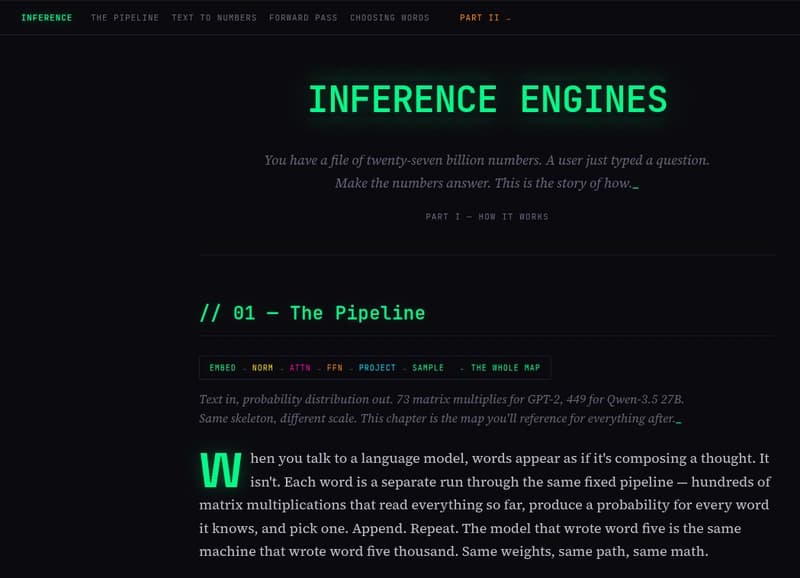
Inference Engines - A visual deep dive into the layers of an LLM
Dev.to


