
Deep Attention-based Sequential Ensemble Learning for BLE-Based Indoor Localization in Care Facilities
arXiv cs.LG / 3/24/2026
💬 OpinionIdeas & Deep AnalysisModels & Research
Key Points
- The paper argues that BLE-based indoor localization in care facilities suffers from limited performance when temporal measurements are treated as independent observations rather than as a sequence.
- It proposes Deep Attention-based Sequential Ensemble Learning (DASEL), which models localization as sequential learning using bidirectional GRUs with attention, frequency-based feature engineering, multi-directional sliding windows, and confidence-weighted temporal smoothing.
- Experiments on real care-facility BLE data using 4-fold temporal cross-validation show DASEL reaching a macro F1 of 0.4438, outperforming the strongest traditional baseline (0.2898) by 53.1%.
- The approach is designed to better capture human movement trajectories, aiming to improve downstream operational use cases like staff allocation and workload management in care settings.
Related Articles
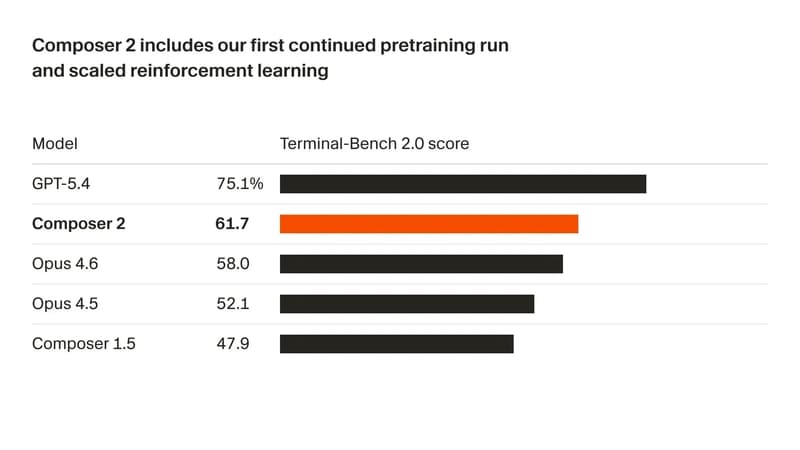
Composer 2: What is new and Compares with Claude Opus 4.6 & GPT-5.4
Dev.to
How UCP Breaks Your E-Commerce Tracking Stack: A Platform-by-Platform Analysis
Dev.to
AI Text Analyzer vs Asking Friends: Which Gives Better Perspective?
Dev.to
[D] Cathie wood claims ai productivity wave is starting, data shows 43% of ceos save 8+ hours weekly
Reddit r/MachineLearning

Microsoft hires top AI researchers from Allen Institute for AI for Suleyman's Superintelligence team
THE DECODER


