
Domain-Specialized Tree of Thought through Plug-and-Play Predictors
arXiv cs.AI / 3/24/2026
💬 OpinionIdeas & Deep AnalysisModels & Research
Key Points
- The paper introduces DST (Domain-Specialized Tree of Thought), a plug-and-play supervised predictor that guides Tree of Thoughts (ToT) search without relying on costly LLM self-evaluation or rigid pruning heuristics.
- DST dynamically adjusts beam expansion based on context and uncertainty, aiming for near-greedy efficiency on easy steps while expanding search when tasks become complex.
- Experiments across math, general, and logical reasoning benchmarks show accuracy that is competitive with or better than strong ToT baselines, including standard ToT.
- The approach substantially reduces computational overhead, reporting 26–75% savings while improving the accuracy–efficiency trade-off in tree-based reasoning.
- Overall, the work positions ToT as more scalable and practical by transforming it from a resource-intensive method into a broadly deployable paradigm for complex LLM problem-solving.
Related Articles
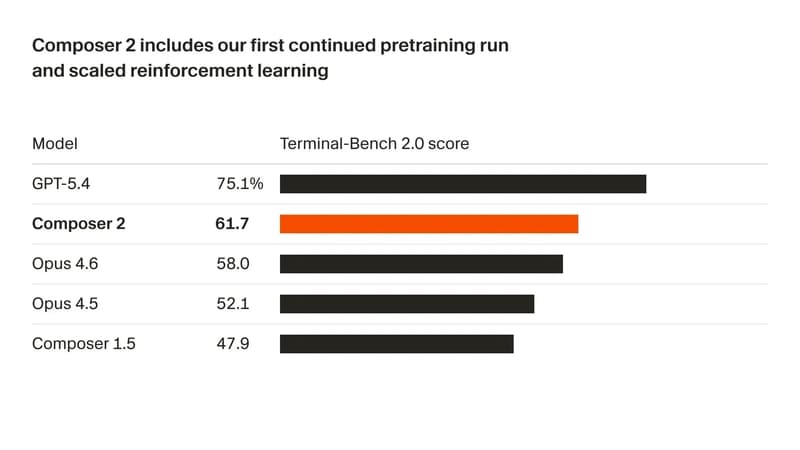
Composer 2: What is new and Compares with Claude Opus 4.6 & GPT-5.4
Dev.to
How UCP Breaks Your E-Commerce Tracking Stack: A Platform-by-Platform Analysis
Dev.to
AI Text Analyzer vs Asking Friends: Which Gives Better Perspective?
Dev.to
[D] Cathie wood claims ai productivity wave is starting, data shows 43% of ceos save 8+ hours weekly
Reddit r/MachineLearning

Microsoft hires top AI researchers from Allen Institute for AI for Suleyman's Superintelligence team
THE DECODER


