
Think before Go: Hierarchical Reasoning for Image-goal Navigation
arXiv cs.RO / 4/21/2026
📰 NewsIdeas & Deep AnalysisModels & Research
Key Points
- The paper addresses image-goal navigation, where an agent must reach a target location specified by an image in unseen environments, noting that end-to-end policies struggle when the goal is far away or in another room.
- It introduces Hierarchical Reasoning Navigation (HRNav), which splits the problem into high-level planning and low-level execution to better handle long-horizon navigation.
- For high-level planning, HRNav trains a vision-language model on a self-collected dataset to produce short-horizon instructions (e.g., whether to go through a door or proceed down a hallway).
- For low-level execution, it uses an online reinforcement learning policy that selects actions based on the short-horizon plan, and it adds a Wandering Suppression Penalty (WSP) to reduce aimless wandering.
- Experiments in simulation and real-world settings show that HRNav outperforms existing approaches, validating the hierarchical design and wandering mitigation strategy.
💡 Insights using this article
This article is featured in our daily AI news digest — key takeaways and action items at a glance.
Related Articles

Every time a new model comes out, the old one is obsolete of course
Reddit r/LocalLLaMA
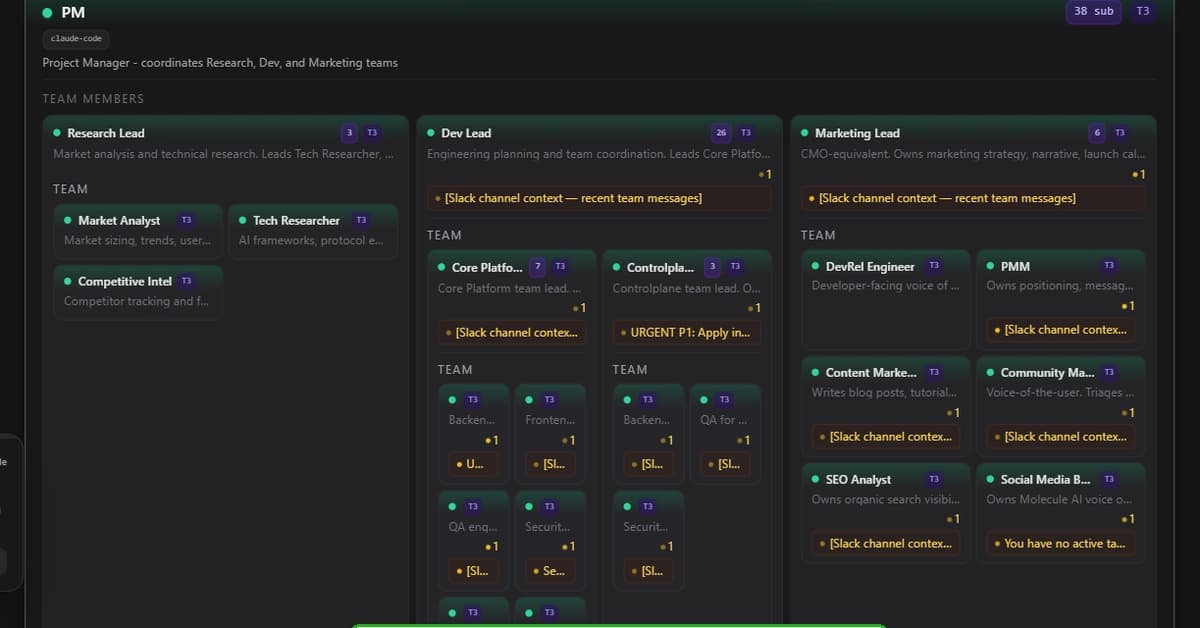
We built it during the NVIDIA DGX Spark Full-Stack AI Hackathon — and it ended up winning 1st place overall 🏆
Dev.to

Stop Losing Progress: Setting Up a Pro Jupyter Workflow in VS Code (No More Colab Timeouts!)
Dev.to
Building AgentOS: Why I’m Building the AWS Lambda for Insurance Claims
Dev.to

Where we are. In a year, everything has changed. Kimi - Minimax - Qwen - Gemma - GLM
Reddit r/LocalLLaMA


