
Ultrasound-CLIP: Semantic-Aware Contrastive Pre-training for Ultrasound Image-Text Understanding
arXiv cs.CV / 4/3/2026
💬 OpinionIdeas & Deep AnalysisModels & Research
Key Points
- The paper introduces Ultrasound-CLIP, a semantic-aware contrastive pretraining method tailored to ultrasound image–text understanding rather than directly reusing CLIP-style models designed for other modalities.
- It builds the US-365K dataset with 365k paired ultrasound images and text labels across 52 anatomical categories, alongside a structured knowledge system using an Ultrasonographic Hierarchical Anatomical Taxonomy (UDT) and a nine-dimension Diagnostic Attribute Framework (UDAF).
- Ultrasound-CLIP improves contrastive learning via semantic soft labels and a semantic loss to better refine discrimination among heterogeneous ultrasound samples.
- The approach also constructs a heterogeneous graph modality from UDAF-derived text representations to enable structured reasoning over lesion–attribute relationships.
- Experiments using patient-level splits show state-of-the-art results on classification and retrieval, with strong generalization across zero-shot, linear probing, and fine-tuning settings.
Related Articles

90000 Tech Workers Got Fired This Year and Everyone Is Blaming AI but Thats Not the Whole Story
Dev.to

Microsoft’s $10 Billion Japan Bet Shows the Next AI Battleground Is National Infrastructure
Dev.to
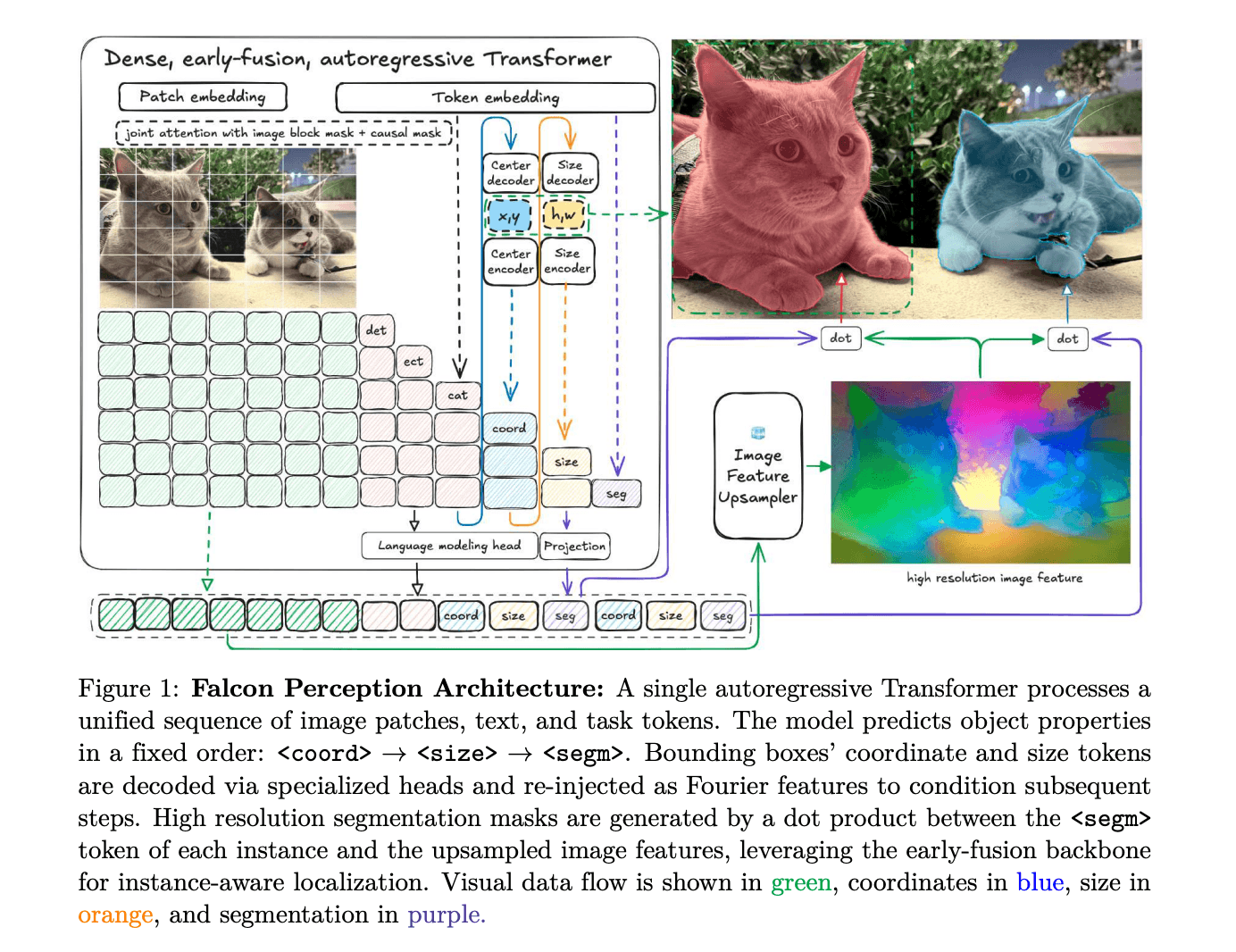
TII Releases Falcon Perception: A 0.6B-Parameter Early-Fusion Transformer for Open-Vocabulary Grounding and Segmentation from Natural Language Prompts
MarkTechPost

The house asked me a question
Dev.to

Precision Clip Selection: How AI Suggests Your In and Out Points
Dev.to


