
Thinking in Different Spaces: Domain-Specific Latent Geometry Survives Cross-Architecture Translation
arXiv cs.LG / 3/24/2026
💬 OpinionIdeas & Deep AnalysisModels & Research
Key Points
- The paper tests whether independently trained language models develop geometrically compatible latent representations and whether those can be used to correct behavior at inference time without updating weights.
- It learns a linear projection that maps teacher activations into a student model’s latent coordinate system, then intervenes by substituting the student residual stream with the translated teacher state during generation.
- Across 20 heterogeneous teacher–student architecture pairings (including MoE, dense, code-specialized, and synthetic variants), the Ridge-based projection yields substantial reasoning performance improvements (reported R^2 values for verbal and math), while control settings (permutation, L1) largely fail.
- Despite stronger projection fits, the study finds near-zero correlation between latent geometric alignment quality and behavioral correction rate, and shows architecture- and domain-specific intervention sensitivity (sometimes inverting across domains).
- A double-dissociation transfer experiment shows catastrophic collapse of learned projections when moved across different reasoning domains, supporting the claim that domain-specific latent subspace geometry is a universal property of LMs.
Related Articles
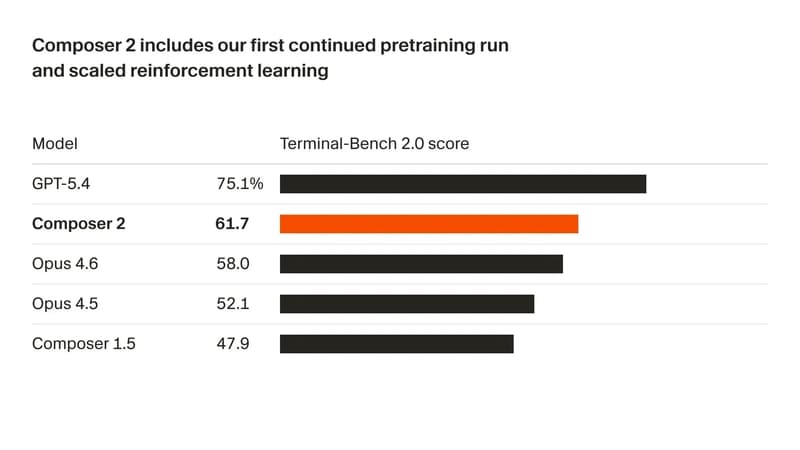
Composer 2: What is new and Compares with Claude Opus 4.6 & GPT-5.4
Dev.to
How UCP Breaks Your E-Commerce Tracking Stack: A Platform-by-Platform Analysis
Dev.to
AI Text Analyzer vs Asking Friends: Which Gives Better Perspective?
Dev.to
[D] Cathie wood claims ai productivity wave is starting, data shows 43% of ceos save 8+ hours weekly
Reddit r/MachineLearning

Microsoft hires top AI researchers from Allen Institute for AI for Suleyman's Superintelligence team
THE DECODER


