
Grading the Unspoken: Evaluating Tacit Reasoning in Quantum Field Theory and String Theory with LLMs
arXiv cs.CL / 4/17/2026
💬 OpinionModels & Research
Key Points
- The study examines whether LLMs can meaningfully support research in highly abstract fields like quantum field theory and string theory, where correctness is tacit, layered, and not strictly binary.
- It introduces a compact, expert-curated dataset (12 questions) and a five-level grading rubric that evaluates not just final statements, but also key concept awareness, reasoning-chain presence, tacit step reconstruction, and added “enrichment.”
- Results show that multiple contemporary LLMs perform near ceiling on explicit derivations within stable conceptual setups, but degrade systematically when they must reconstruct omitted reasoning steps.
- The paper attributes many failures to instability in representation selection, where models often cannot find the correct conceptual framing needed to resolve implicit structural tensions.
- The authors argue that abstract theoretical physics is a particularly sensitive benchmark for exposing the epistemic limits of current AI evaluation methods.
Related Articles
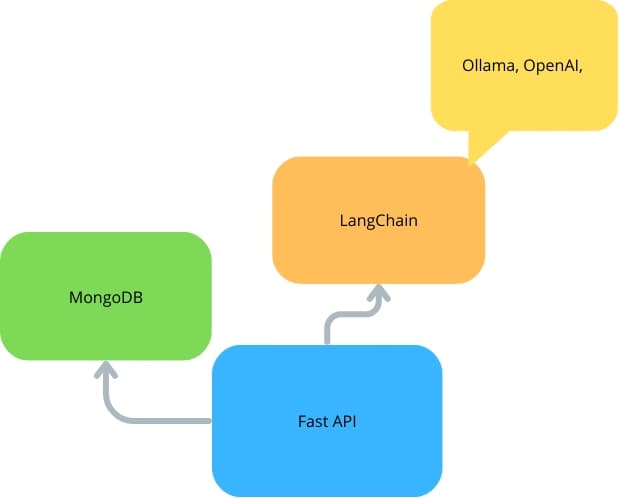
FastAPI With LangChain and MongoDB
Dev.to
![[2026] OpenTelemetry for LLM Observability — Self-Hosted Setup](/_next/image?url=https%3A%2F%2Fmedia2.dev.to%2Fdynamic%2Fimage%2Fwidth%3D1200%2Cheight%3D627%2Cfit%3Dcover%2Cgravity%3Dauto%2Cformat%3Dauto%2Fhttps%253A%252F%252Fdev-to-uploads.s3.amazonaws.com%252Fuploads%252Farticles%252Flu4b6ttuhur71z5gemm0.png&w=3840&q=75)
[2026] OpenTelemetry for LLM Observability — Self-Hosted Setup
Dev.to

The AI Education Product on Product Hunt Worth Watching
Dev.to

The joy and pain of training an LLM from scratch
Reddit r/LocalLLaMA

Did you know that you can use Qwen3.5-35B-A3B-Base as an instruction/reasoning Model?
Reddit r/LocalLLaMA


