
CADMAS-CTX: Contextual Capability Calibration for Multi-Agent Delegation
arXiv cs.AI / 4/21/2026
📰 NewsDeveloper Stack & InfrastructureIdeas & Deep AnalysisModels & Research
Key Points
- The paper revisits multi-agent delegation and argues that an agent’s effective capability varies with task context rather than remaining fixed as a static skill profile.
- It introduces CADMAS-CTX, which learns hierarchical, context-conditioned Beta posteriors per agent to capture experience across coarse context buckets.
- Delegation decisions are made with a risk-aware scoring rule that uses the posterior mean plus an uncertainty penalty, aiming to route tasks only when evidence supports one agent being better.
- The authors provide theoretical guarantees via contextual bandit analysis, proving lower cumulative regret for context-aware routing under sufficient context heterogeneity.
- Experiments on GAIA and SWE-bench show consistent gains (GAIA accuracy: 0.442 vs 0.381 static baseline; SWE-bench Lite resolve rate: 22.3% → 31.4%), and ablations confirm the uncertainty penalty helps with context-tagging noise.
Related Articles

¿Hasta qué punto podría la IA reemplazarnos en nuestros trabajos? A veces creo que la gente exagera un poco.
Reddit r/artificial
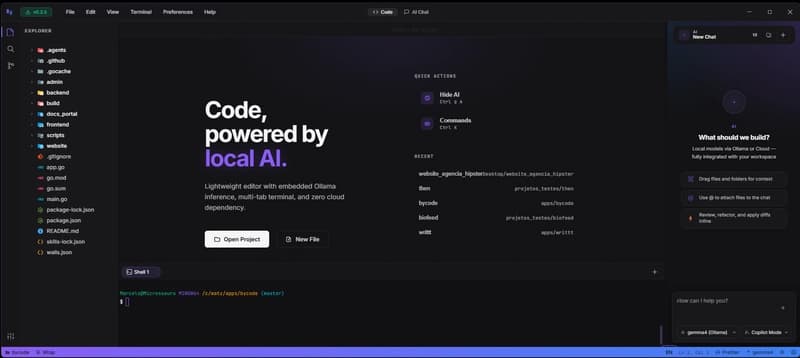
Why I Built byCode: A 100% Local, Privacy-First AI IDE
Dev.to

Magnificent irony as Meta staff unhappy about running surveillance software on work PCs
The Register
v0.21.1
Ollama Releases
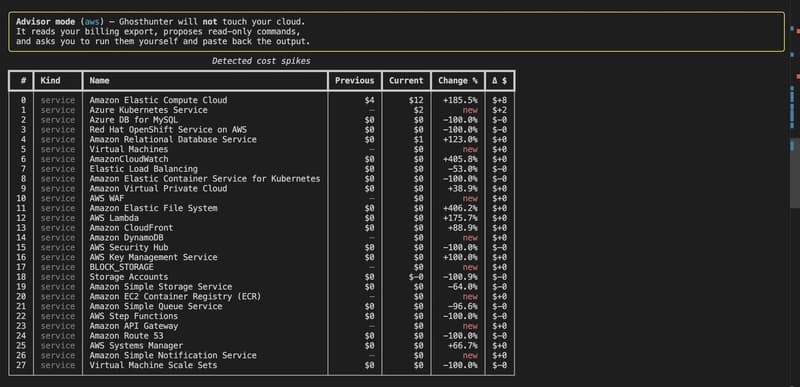
How I Built an AI Agent That Investigates Cloud Bill Spikes (Architecture Inside)
Dev.to


