
Meta-Learning at Scale for Large Language Models via Low-Rank Amortized Bayesian Meta-Learning
arXiv stat.ML / 4/3/2026
💬 OpinionIdeas & Deep AnalysisModels & Research
Key Points
- The paper proposes Amortized Bayesian Meta-Learning for LoRA (ABMLL) to fine-tune large language models across multiple datasets with low-rank adaptations while improving cross-dataset generalization in few-shot settings.
- ABMLL reframes the roles of local vs. global variables within the LoRA parameterization and introduces a new hyperparameter that trades off reconstruction accuracy against how closely task-specific parameters remain faithful to global parameters.
- Experiments on large models such as Llama3-8B and Qwen2-7B show ABMLL outperforming existing approaches on CrossFit and Unified-QA, improving both accuracy and expected calibration error.
- The authors also demonstrate that meta-learning can be combined with in-context learning to further boost performance on the same benchmarks and on legal and chemistry application tasks.
Related Articles

90000 Tech Workers Got Fired This Year and Everyone Is Blaming AI but Thats Not the Whole Story
Dev.to

Microsoft’s $10 Billion Japan Bet Shows the Next AI Battleground Is National Infrastructure
Dev.to
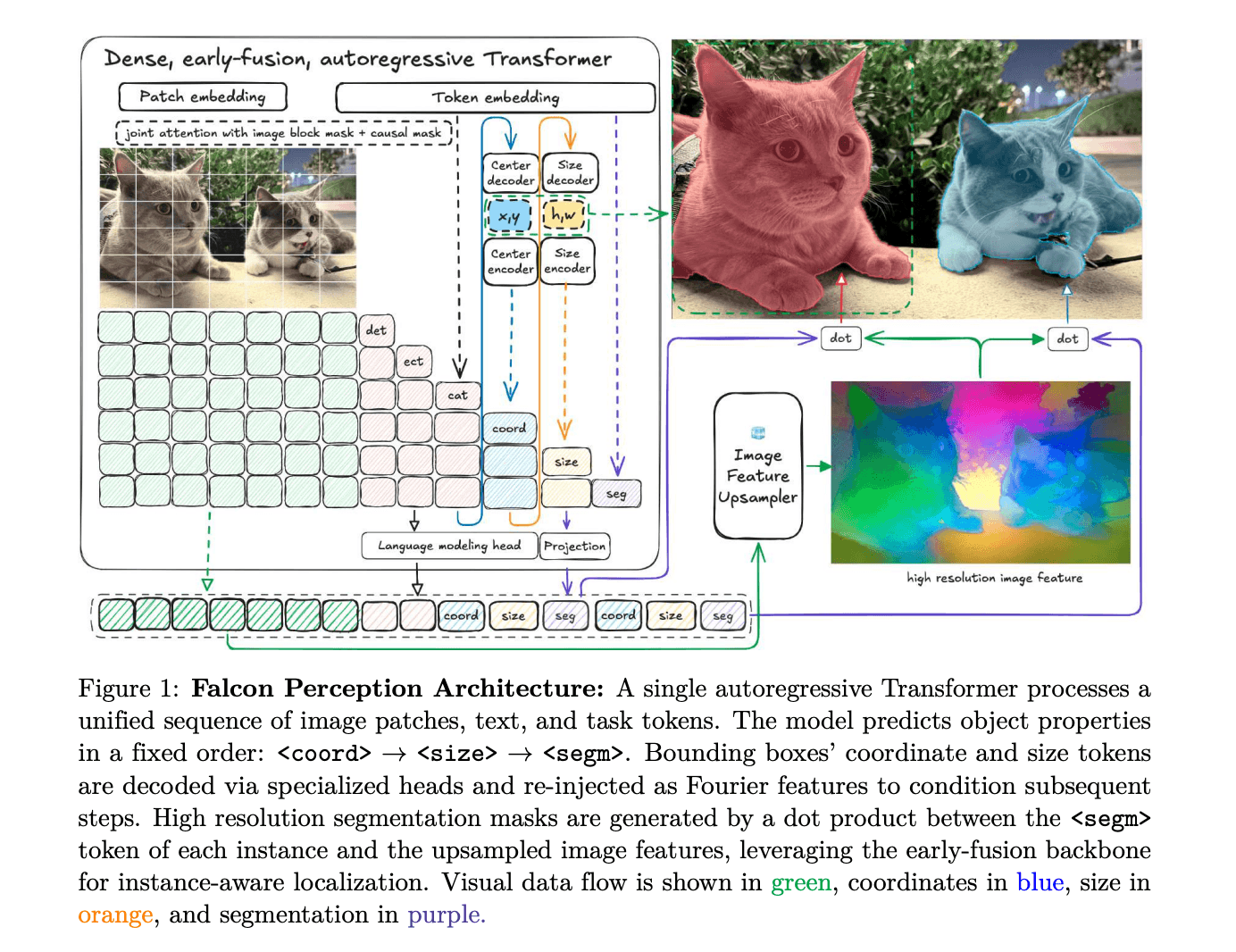
TII Releases Falcon Perception: A 0.6B-Parameter Early-Fusion Transformer for Open-Vocabulary Grounding and Segmentation from Natural Language Prompts
MarkTechPost

The house asked me a question
Dev.to

Precision Clip Selection: How AI Suggests Your In and Out Points
Dev.to


