
SAVe: Self-Supervised Audio-visual Deepfake Detection Exploiting Visual Artifacts and Audio-visual Misalignment
arXiv cs.LG / 3/27/2026
💬 OpinionIdeas & Deep AnalysisModels & Research
Key Points
- 提案手法SAVeは、マルチモーダルのディープフェイクに見られる微細な視覚アーティファクトと音声・映像の不整合を捉える自己教師ありの検出フレームワークである。
- 従来の「合成データ中心で学習」する依存を避けるため、SAVeは真正動画だけで学習し、アイデンティティを保ちつつ局所領域を意図的に自己ブレンドした疑似改変をその場で生成する。
- 視覚側では顔の複数粒度に対して補完的な手がかりを学習し、音声側では口の動きと音声の同期(リップ・スピーチ同期)のズレを検出するアライメント成分でクロスモーダル証拠を捉える。
- FakeAVCelebおよびAV-LipSync-TIMITでの実験により、同一領域での競争力のある性能と、別データセットへの汎化性能の高さが示されている。
- 研究全体として、合成偽造への学習バイアスを抑え、未知の改変にもスケールしやすいマルチモーダル検出の自己教師ありパラダイムを提示している。
広告
Related Articles

Got My 39-Agent System Audited Live. Here's What the Maturity Scorecard Revealed.
Dev.to

The Redline Economy
Dev.to

$500 GPU outperforms Claude Sonnet on coding benchmarks
Dev.to

From Scattershot to Sniper: AI for Hyper-Personalized Media Lists
Dev.to
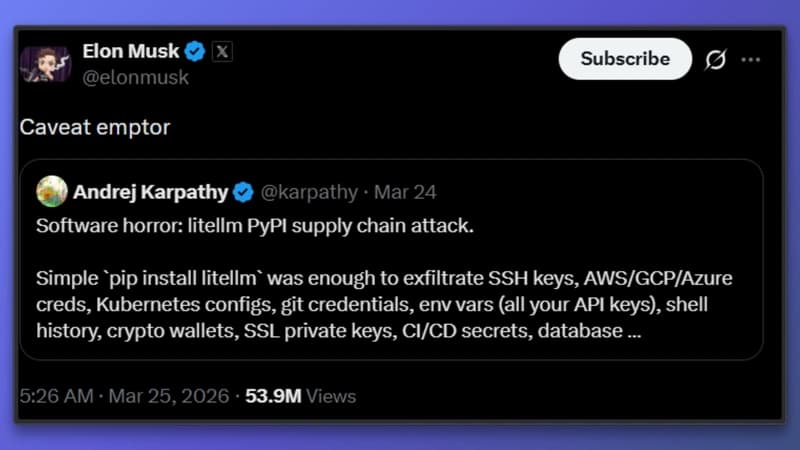
The LiteLLM Supply Chain Attack: A Wake-Up Call for AI Infrastructure
Dev.to


