
Robust Optimization for Mitigating Reward Hacking with Correlated Proxies
arXiv cs.LG / 4/15/2026
📰 NewsSignals & Early TrendsIdeas & Deep AnalysisModels & Research
Key Points
- The paper addresses reward hacking in reinforcement learning by designing robust agents trained with imperfect proxy rewards rather than assuming proxies perfectly match the true objective.
- It reframes reward hacking as a robust policy optimization problem over all proxy rewards that satisfy an r-correlation constraint with the true reward, leading to a tractable max-min formulation against worst-case correlated proxies.
- For cases where rewards are linear in known features, the method is extended to leverage that prior structure, producing improved policies and interpretable worst-case rewards.
- Experiments across multiple environments show the proposed algorithms outperform ORPO in worst-case proxy returns and improve robustness and stability as the proxy–true reward correlation varies.
- The authors release code publicly, enabling researchers to reproduce and build on the robustness/transparency approach.
Related Articles

Black Hat Asia
AI Business

The Complete Guide to Better Meeting Productivity with AI Note-Taking
Dev.to

5 Ways Real-Time AI Can Boost Your Sales Call Performance
Dev.to
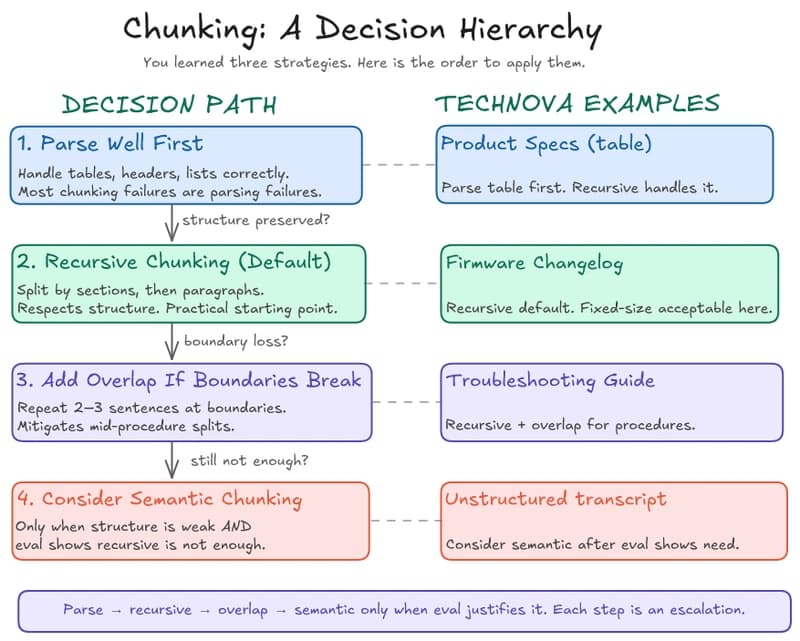
RAG in Practice — Part 4: Chunking, Retrieval, and the Decisions That Break RAG
Dev.to
Why dynamically routing multi-timescale advantages in PPO causes policy collapse (and a simple decoupled fix) [R]
Reddit r/MachineLearning


