
Learning 3D Reconstruction with Priors in Test Time
arXiv cs.CV / 4/7/2026
💬 OpinionSignals & Early TrendsIdeas & Deep AnalysisModels & Research
Key Points
- The paper proposes a test-time optimization framework for multiview Transformers (MVTs) that improves 3D reconstruction tasks by using available priors such as camera poses, intrinsics, and depth without retraining or changing the underlying image-only model.
- Instead of injecting priors into the network architecture, the method treats priors as constraints by adding penalty terms to the inference-time optimization objective.
- The optimization loss combines a self-supervised multi-view consistency objective (photometric or geometric losses via view-to-view renderings) with the prior-based penalty terms on the relevant predicted outputs.
- Experiments on benchmarks including point map estimation and camera pose estimation show large improvements over base MVTs, with point-map distance error reduced by more than half on ETH3D, 7-Scenes, and NRGBD.
- The approach also outperforms retrained, prior-aware feed-forward baselines, highlighting test-time constrained optimization (TCO) as an effective way to incorporate priors for 3D vision.
Related Articles

Black Hat Asia
AI Business
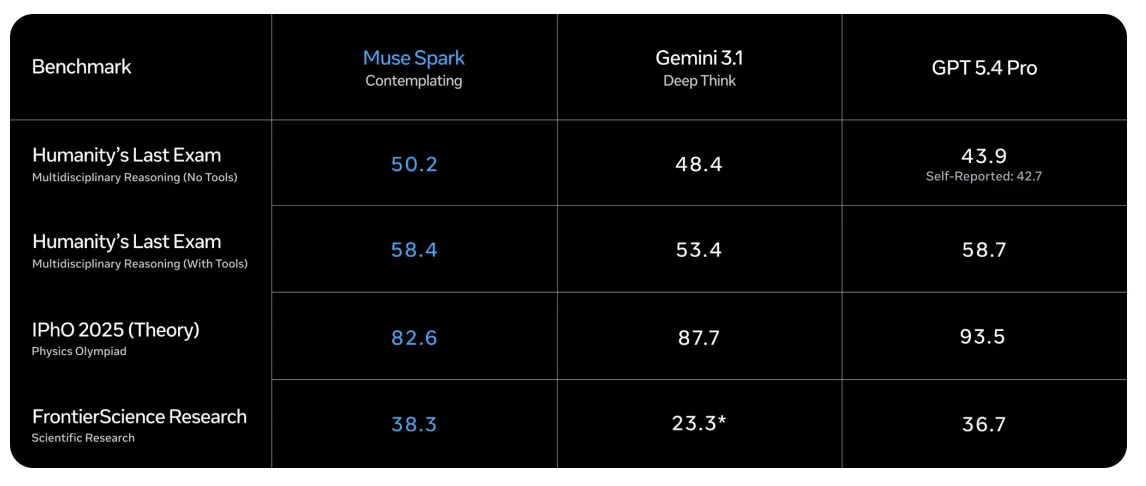
Meta Superintelligence Lab Releases Muse Spark: A Multimodal Reasoning Model With Thought Compression and Parallel Agents
MarkTechPost

Chatbots are great at manipulating people to buy stuff, Princeton boffins find
The Register
I tested and ranked every ai companion app I tried and here's my honest breakdown
Reddit r/artificial

Big Tech firms are accelerating AI investments and integration, while regulators and companies focus on safety and responsible adoption.
Dev.to


