
From Skeletons to Semantics: Design and Deployment of a Hybrid Edge-Based Action Detection System for Public Safety
arXiv cs.CV / 4/1/2026
💬 OpinionIdeas & Deep AnalysisModels & Research
Key Points
- The paper addresses the challenge of deploying real-time, privacy-aware action detection for public safety in latency- and resource-constrained edge settings.
- It proposes a hybrid architecture that combines skeleton-based motion analysis (low overhead, continuous monitoring) with vision-language models for semantic understanding and zero-shot reasoning.
- Rather than introducing a new recognition model, the work focuses on system-level comparison of motion-centric versus semantic paradigms under realistic edge constraints.
- A demonstrator implementation on a GPU-enabled edge device evaluates latency, resource usage, and operational trade-offs to quantify the practical feasibility of the approach.
- The results suggest hybrid designs that selectively augment fast motion-based detection with higher-level semantic reasoning for more complex or previously unseen situations.
Related Articles

Show HN: 1-Bit Bonsai, the First Commercially Viable 1-Bit LLMs
Dev.to

I Built an AI Agent That Can Write Its Own Tools When It Gets Stuck
Dev.to

Agent Self-Discovery: How AI Agents Find Their Own Wallets
Dev.to
[P] Federated Adversarial Learning
Reddit r/MachineLearning
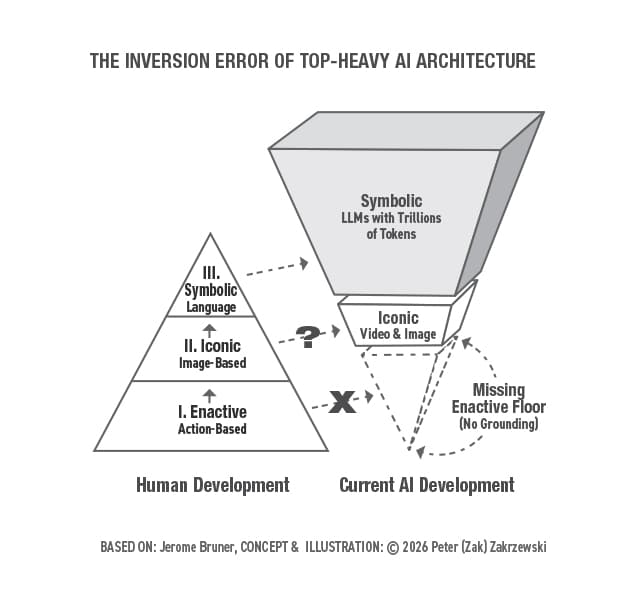
The Inversion Error: Why Safe AGI Requires an Enactive Floor and State-Space Reversibility
Towards Data Science


