
RoboAlign-R1: Distilled Multimodal Reward Alignment for Robot Video World Models
arXiv cs.RO / 5/6/2026
📰 NewsIdeas & Deep AnalysisModels & Research
Key Points
- RoboAlign-R1 is an arXiv-announced framework for improving robot video world models by aligning training objectives with robot-relevant goals such as instruction following, manipulation success, and physical plausibility.
- The work introduces RobotWorldBench (10,000 annotated video–instruction pairs from four robot data sources) and RoboAlign-Judge, a multimodal teacher judge that provides fine-grained six-dimensional evaluation of generated videos.
- RoboAlign-R1 uses teacher–student distillation to convert the teacher judge into a lightweight student reward model, enabling efficient reinforcement-learning-based post-training.
- To address long-horizon autoregressive error accumulation, it proposes Sliding Window Re-encoding (SWR), a training-free inference method that refreshes generation context and reduces rollout drift.
- Reported in-domain results show a 10.1% improvement in the aggregate six-dimension score over the strongest baseline (including 7.5% on manipulation accuracy and 4.6% on instruction following), while SWR yields a 2.8% SSIM gain and a 9.8% LPIPS reduction with ~1% additional latency.
Related Articles

Top 10 Free AI Tools for Students in 2026: The Ultimate Study Guide
Dev.to

AI as Your Contingency Co-Pilot: Automating Wedding Day 'What-Ifs'
Dev.to
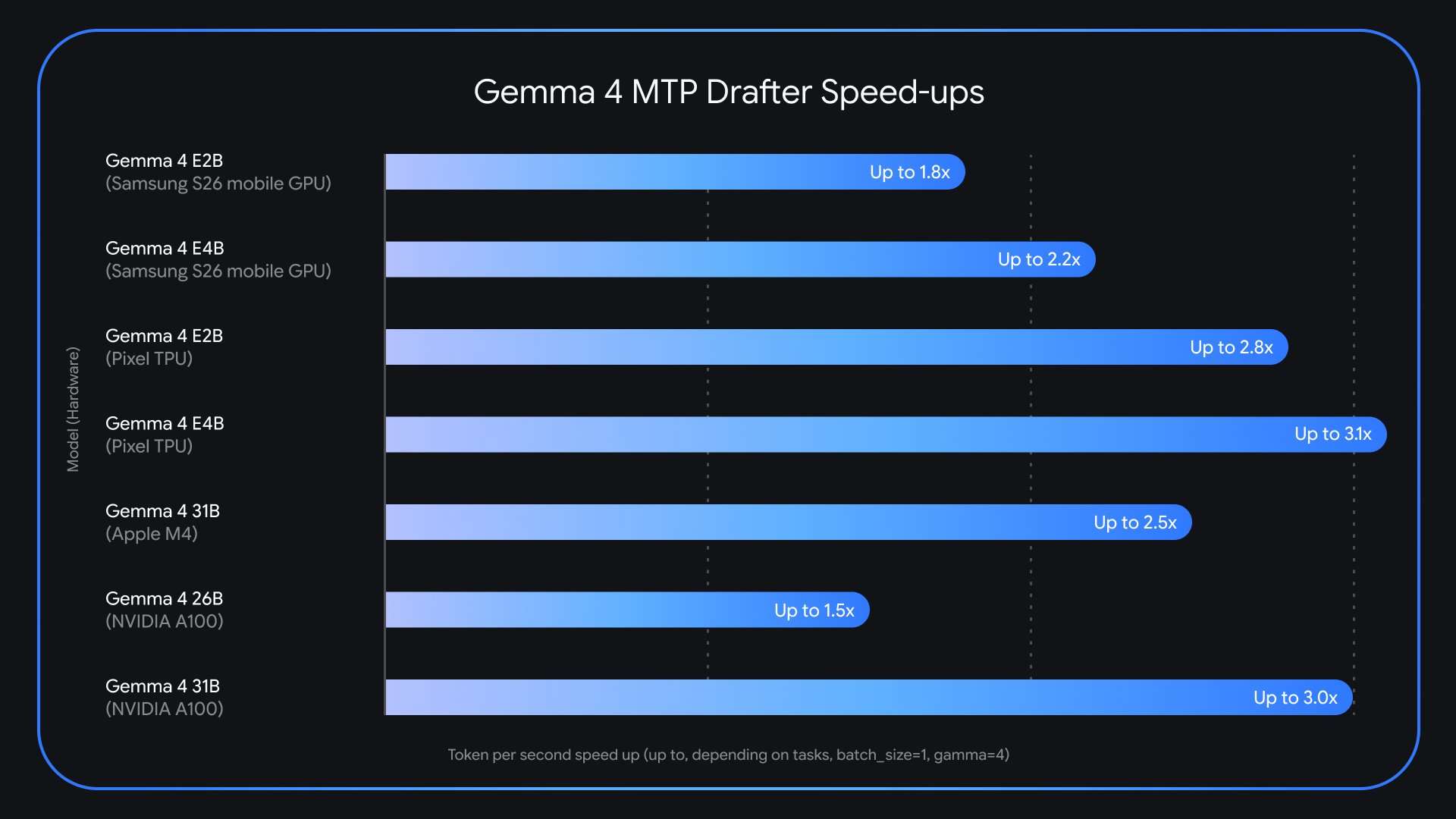
Google AI Releases Multi-Token Prediction (MTP) Drafters for Gemma 4: Delivering Up to 3x Faster Inference Without Quality Loss
MarkTechPost
When Claude Hallucinates in Court: The Latham & Watkins Incident and What It Means for Attorney Liability
MarkTechPost
Solidity LM surpasses Opus
Reddit r/LocalLLaMA


