
ReefMapGS: Enabling Large-Scale Underwater Reconstruction by Closing the Loop Between Multimodal SLAM and Gaussian Splatting
arXiv cs.RO / 4/15/2026
💬 OpinionSignals & Early TrendsIdeas & Deep AnalysisModels & Research
Key Points
- The paper introduces ReefMapGS, an incremental 3D Gaussian Splatting (3DGS) reconstruction framework designed for underwater environments where accurate camera poses are difficult to obtain with compute-heavy structure-from-motion.
- It “closes the loop” by using multimodal sensor data (acoustic, inertial, pressure, and visual) to run pose-graph SLAM with uncertainty estimates, providing trajectory/camera poses for 3DGS.
- ReefMapGS builds an initial reconstruction from high-certainty regions, then progressively expands the model while alternating local tracking of new observations with optimization of the 3DGS scene representation.
- The refined poses are fed back into the pose graph to globally optimize the vehicle trajectory, improving overall consistency across long survey routes.
- Experiments report COLMAP-free 3D reconstruction of two complex reef sites and more accurate global pose estimation for an AUV over trajectories up to 700 meters.
Related Articles

Black Hat Asia
AI Business

The Complete Guide to Better Meeting Productivity with AI Note-Taking
Dev.to

5 Ways Real-Time AI Can Boost Your Sales Call Performance
Dev.to
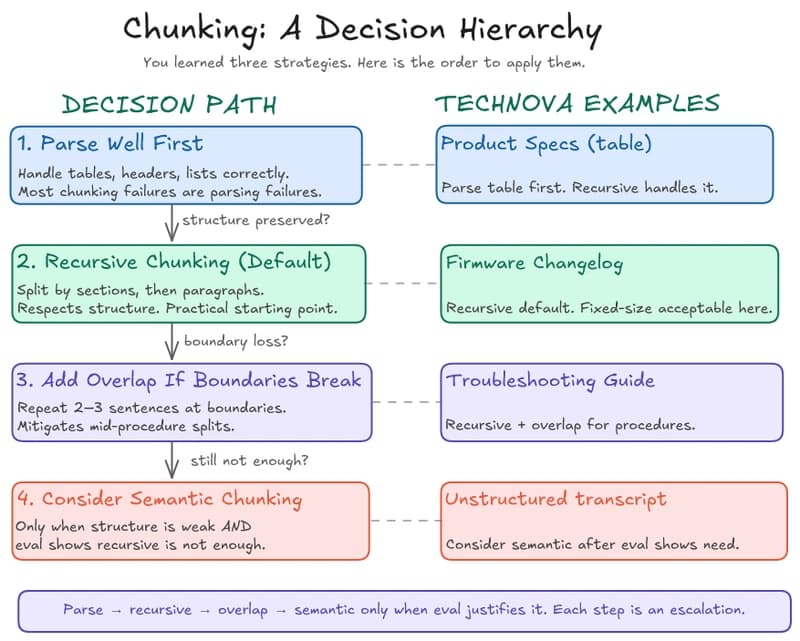
RAG in Practice — Part 4: Chunking, Retrieval, and the Decisions That Break RAG
Dev.to
Why dynamically routing multi-timescale advantages in PPO causes policy collapse (and a simple decoupled fix) [R]
Reddit r/MachineLearning


