
General Explicit Network (GEN): A novel deep learning architecture for solving partial differential equations
arXiv cs.LG / 4/7/2026
📰 NewsIdeas & Deep AnalysisModels & Research
Key Points
- The paper proposes a new deep learning architecture called the General Explicit Network (GEN) aimed at solving partial differential equations (PDEs) more reliably than prior physics-informed neural network (PINN) approaches.
- It argues that many existing PINN variants, which rely on discrete point-to-point fitting and continuous activations, can capture local solution characteristics but struggle with robustness and extensibility.
- GEN is designed as a point-to-function solver, where the function component is built using basis functions derived from prior knowledge of the underlying PDEs.
- Experiments reported in the paper suggest that this formulation improves robustness of the learned solutions and enhances their ability to generalize across problem settings.
Related Articles
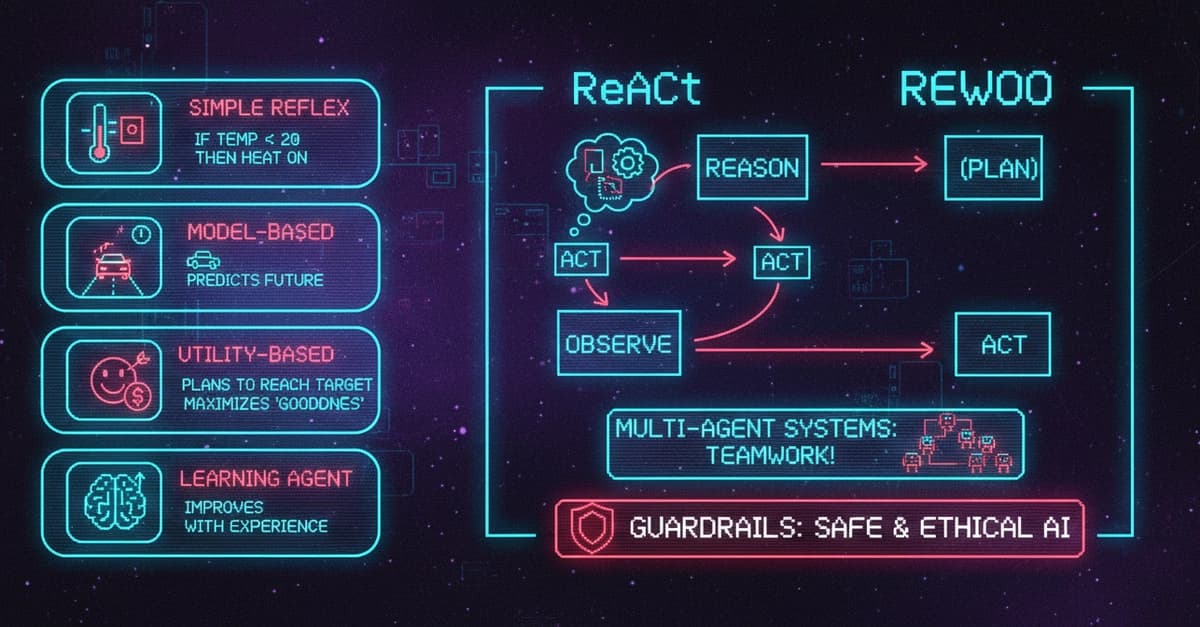
AI Agents Explained: 5 Types, Components, Frameworks, and Real-World Use Cases
Dev.to

Edge-to-Cloud Swarm Coordination for circular manufacturing supply chains with embodied agent feedback loops
Dev.to

Why QIS Is Not a Sync Problem: The Mailbox Model for Distributed Intelligence
Dev.to

The Ethics of AI: A Developer's Responsibility
Dev.to

Graph2Seq: Graph to Sequence Learning with Attention-based Neural Networks
Dev.to


