
Playing Psychic: Using Thought Trees to Predict Reasoning Models Accuracy on Coding Tasks
arXiv cs.AI / 4/21/2026
📰 NewsSignals & Early TrendsIdeas & Deep AnalysisModels & Research
Key Points
- The paper studies how frontier reasoning LLMs perform on real-world coding benchmarks, extending evaluation beyond standard competitive programming tests.
- It introduces a method to automatically generate new coding tasks of arbitrary difficulty and structure from existing benchmarks.
- The authors find that not only the contents but also the structure of a model’s reasoning trace is a strong predictor of whether the final answer is correct.
- They propose “structured thought-trees” to represent reasoning traces, train a lightweight classifier to assess trace correctness from extracted features, and show that flagging and retrying structurally anomalous traces improves accuracy in lower-complexity settings.
Related Articles

¿Hasta qué punto podría la IA reemplazarnos en nuestros trabajos? A veces creo que la gente exagera un poco.
Reddit r/artificial
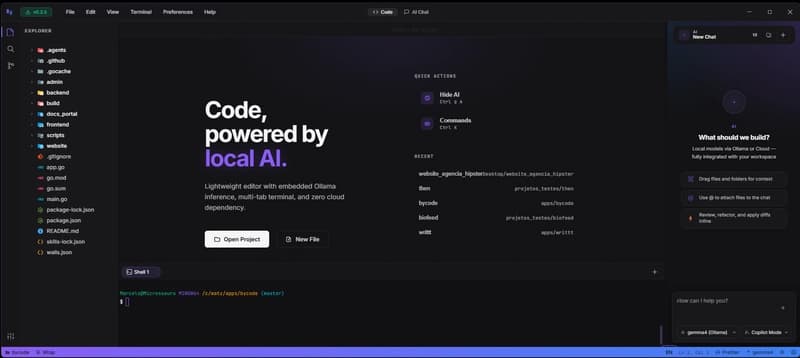
Why I Built byCode: A 100% Local, Privacy-First AI IDE
Dev.to

Magnificent irony as Meta staff unhappy about running surveillance software on work PCs
The Register

ETHENEA (ETHENEA Americas LLC) Analyst View: Asset Allocation Resilience in the 2026 Global Macro Cycle
Dev.to

Blaze Balance Engine SaaS
Dev.to


