
Fusing Urban Structure and Semantics: A Conditional Diffusion Model for Cross-City OD Matrix Generation
arXiv cs.LG / 5/5/2026
📰 NewsDeveloper Stack & InfrastructureModels & Research
Key Points
- The paper introduces SEDAN, a Structure-Enhanced Diffusion (conditional diffusion) model aimed at generating cross-city commuting OD (origin-destination) matrices that generalize better than prior approaches.
- Cities are represented as attributed graphs where regions are nodes with demographic and point-of-interest features, commuting flows become weighted edges, and both adjacency and distance matrices encode spatial structure.
- SEDAN fuses semantic and spatial information by using graph-transformer-based node interactions for latent travel demand while injecting adjacency as an attention guidance signal and distance as the diffusion conditioning to reflect proximity and travel impedance.
- Experiments on real U.S. OD datasets show a 7.38% RMSE improvement over the prior state-of-the-art baseline WEDAN, with robustness across different urban scenarios and structural patterns.
- The authors provide code for SEDAN, enabling others to reproduce and extend the proposed cross-city OD matrix generation method.
Related Articles
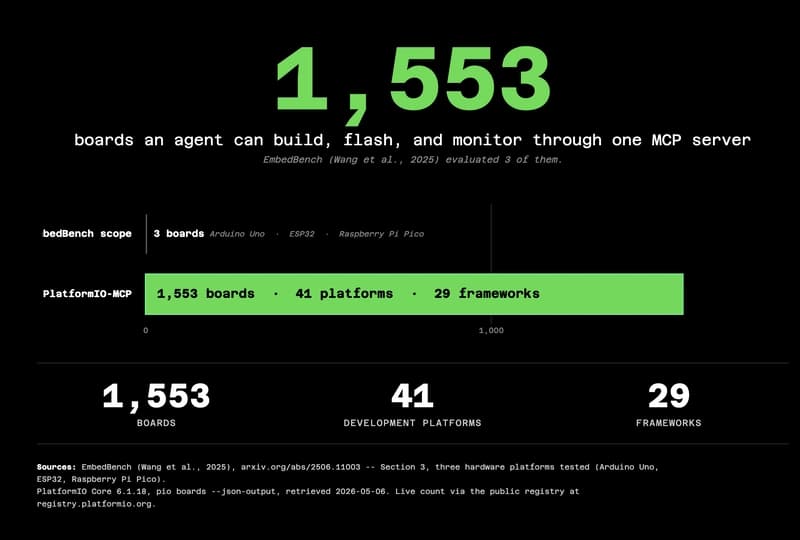
The 55.6% problem: why frontier LLMs fail at embedded code
Dev.to

Four CVEs in a week, all the same shape: when agents execute LLM-generated code
Dev.to
Stop Burning Cash: How to Compress LLM Prompts by 60% in Real-Time | 0507-0255
Dev.to
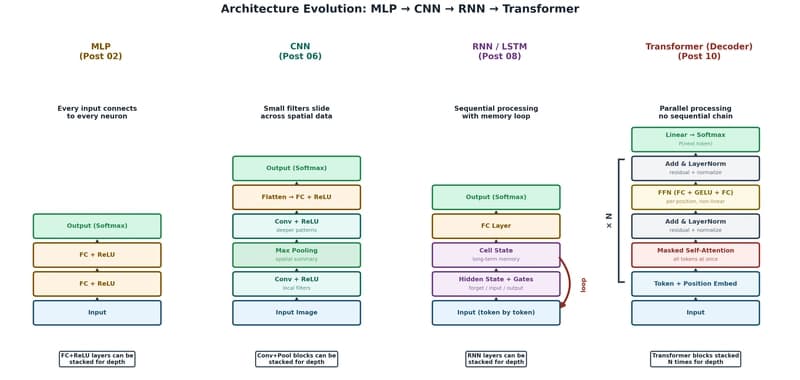
The Transformer: The Architecture Behind Modern AI
Dev.to

Foundational Models Defining a New Era in Vision: A Survey and Outlook
Dev.to


