
AdaBoost Does Not Always Cycle: A Computer-Assisted Counterexample
arXiv cs.LG / 4/9/2026
📰 NewsIdeas & Deep AnalysisModels & Research
Key Points
- The paper presents a computer-assisted counterexample to a COLT 2012 open question by Rudin, Schapire, and Daubechies about whether exhaustive AdaBoost must eventually converge to a finite cycle.
- The construction uses a block-product “gadget” where two components share an exact period-2 orbit in their 5-step branch maps, while their linearized return maps have dominant eigenvalues whose logarithms have an irrational ratio.
- This irrational eigenvalue-log ratio implies an irrational asymptotic frequency for the resulting burst-winner sequence, which rules out eventual periodicity.
- The authors state that all claims are certified using exact rational arithmetic, and the announcement notes the work was developed in collaboration with GPT-5.4 Pro and Claude Opus 4.6.
Related Articles
Research with ChatGPT
Dev.to
Silicon Valley is quietly running on Chinese open source models and almost nobody is talking about it
Reddit r/LocalLLaMA

Why AI Product Quality Is Now an Evaluation Pipeline Problem, Not a Model Problem
Dev.to
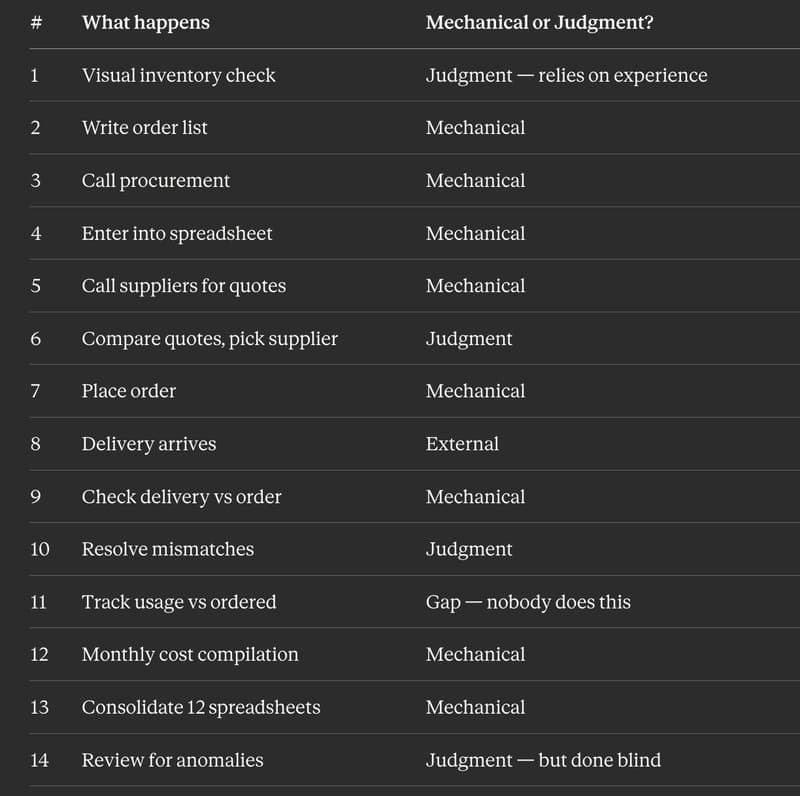
I Replaced 12 Kitchen Managers Guessing "How Much Chicken Do We Need" With 3 ML Models. Here's the Entire Architecture.
Dev.to

AI Model Router API - REST + MCP, Free Tier
Dev.to


