
High-Stakes Personalization: Rethinking LLM Customization for Individual Investor Decision-Making
arXiv cs.CL / 4/7/2026
💬 OpinionSignals & Early TrendsIdeas & Deep AnalysisModels & Research
Key Points
- The paper argues that customizing LLMs for individual investor decision-making is fundamentally harder than typical personalization settings where user preferences are stable and evaluation labels are available.
- It identifies four key failure modes/limitations in current LLM customization paradigms: complex and evolving behavioral memory, thesis consistency over time under distribution drift, tension between subjective investment style and objective evidence, and personalization alignment without reliable ground-truth labels.
- The authors describe architectural responses learned from a deployed AI-augmented portfolio management system, linking the above challenges to concrete design choices.
- The work proposes open research directions for personalized NLP in high-stakes, temporally extended, stochastic domains where outcomes are delayed and evaluation is difficult.
- Overall, it reframes LLM customization as a long-horizon decision-support problem rather than a short-session preference-matching task.
- Point 5
Related Articles

Black Hat Asia
AI Business
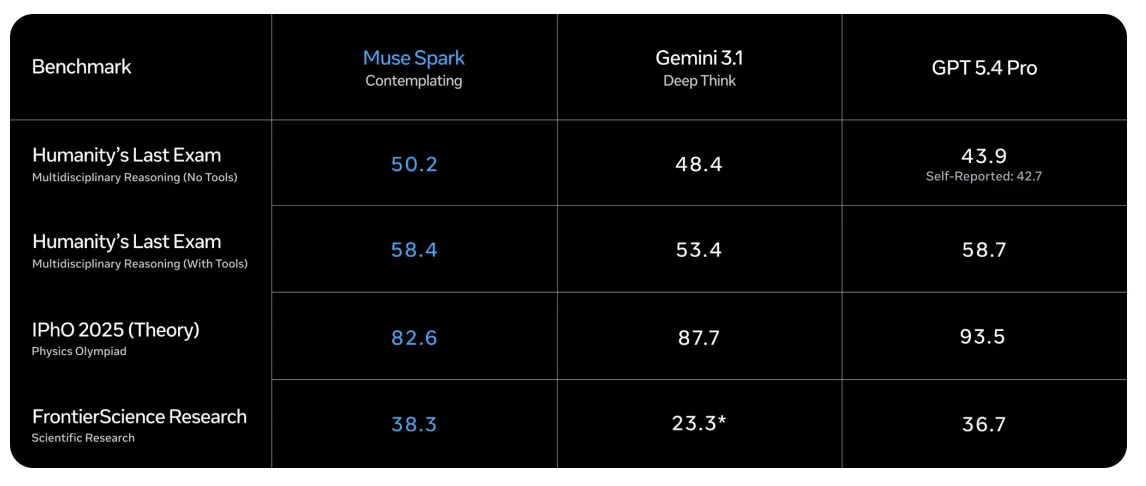
Meta Superintelligence Lab Releases Muse Spark: A Multimodal Reasoning Model With Thought Compression and Parallel Agents
MarkTechPost

Chatbots are great at manipulating people to buy stuff, Princeton boffins find
The Register
I tested and ranked every ai companion app I tried and here's my honest breakdown
Reddit r/artificial

Big Tech firms are accelerating AI investments and integration, while regulators and companies focus on safety and responsible adoption.
Dev.to


