
Interpretable Difficulty-Aware Knowledge Tracing in Tutor-Student Dialogues
arXiv cs.CL / 5/5/2026
📰 NewsModels & Research
Key Points
- The paper addresses the challenge of knowledge tracing (KT) in tutor–student dialogues by proposing a framework that updates students’ knowledge state at each conversational turn.
- It improves over prior dialogue-based KT methods by explicitly modeling both question/task difficulty and student ability, rather than relying on opaque latent representations from LLMs.
- The framework uses Item Response Theory (IRT) to translate LLM outputs into interpretable parameters for student ability and question difficulty, grounding predictions in cognitive learning theory.
- Experiments on two tutor–student dialogue datasets show the proposed approach outperforms existing KT baselines while producing qualitative, theory-consistent interpretability.
- Overall, the work advances interpretable, difficulty-aware AI tutoring analytics by combining LLMs with structured cognitive modeling.
Related Articles

Why Retail Chargeback Recovery Could Be AgentHansa's First Real PMF
Dev.to
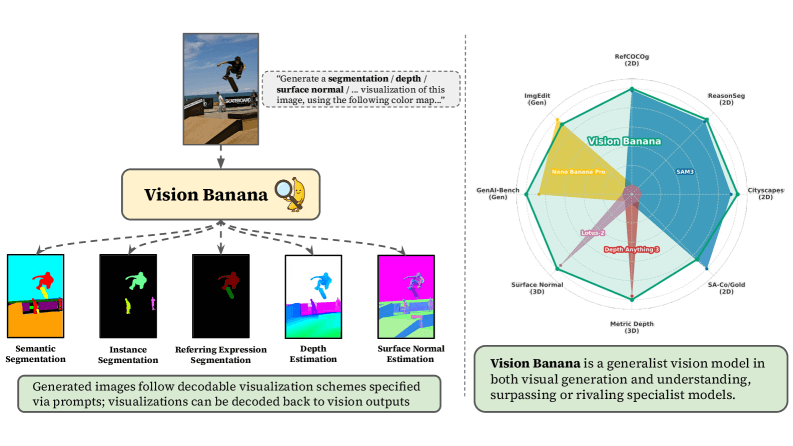
Last Week in AI #340 - OpenAI vs Musk + Microsoft, DeepSeek v4, Vision Banana
Last Week in AI

Trying to train tiny LLMs on length constrained reddit posts summarization task using GRPO on 3xMac Minis - updates!
Reddit r/LocalLLaMA

Uber Shares What Happens When 1.500 AI Agents Hit Production
Reddit r/artificial
vibevoice.cpp: Microsoft VibeVoice (TTS + long-form ASR with diarization) ported to ggml/C++, runs on CPU/CUDA/Metal/Vulkan, no Python at inference
Reddit r/LocalLLaMA


