
DualCoT-VLA: Visual-Linguistic Chain of Thought via Parallel Reasoning for Vision-Language-Action Models
arXiv cs.RO / 3/24/2026
💬 OpinionSignals & Early TrendsIdeas & Deep AnalysisModels & Research
Key Points
- DualCoT-VLA is a proposed vision-language-action (VLA) reasoning approach designed to improve performance on complex, multi-step robotic tasks that require both logical planning and fine-grained spatial perception.
- The method uses two complementary chain-of-thought components—one visual CoT for low-level spatial understanding and one linguistic CoT for high-level task planning—rather than relying on a single isolated, multimodal reasoning stream.
- To address inference latency and compounding errors from autoregressive step-by-step decoding, DualCoT-VLA introduces a parallel reasoning mechanism with two sets of learnable query tokens and reformulates reasoning into single-step forward inference.
- The paper reports state-of-the-art results on the LIBERO and RoboCasa GR1 benchmarks and claims effectiveness on real-world robotic platforms.
Related Articles
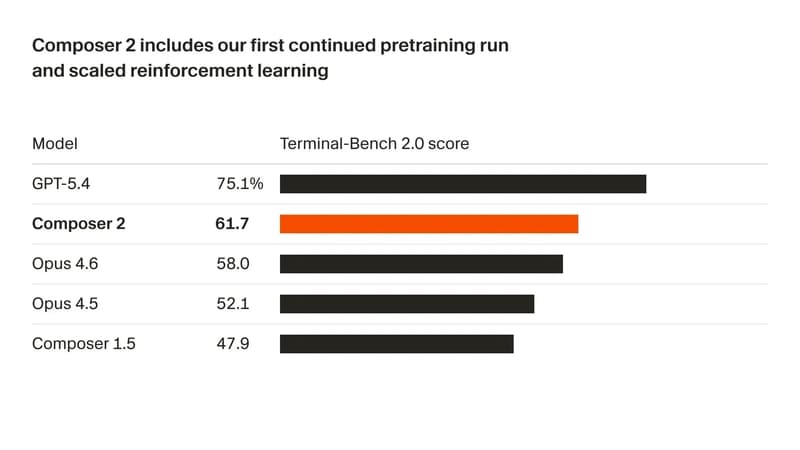
Composer 2: What is new and Compares with Claude Opus 4.6 & GPT-5.4
Dev.to
How UCP Breaks Your E-Commerce Tracking Stack: A Platform-by-Platform Analysis
Dev.to
AI Text Analyzer vs Asking Friends: Which Gives Better Perspective?
Dev.to
[D] Cathie wood claims ai productivity wave is starting, data shows 43% of ceos save 8+ hours weekly
Reddit r/MachineLearning

Microsoft hires top AI researchers from Allen Institute for AI for Suleyman's Superintelligence team
THE DECODER


