
The Verification Tax: Fundamental Limits of AI Auditing in the Rare-Error Regime
arXiv cs.LG / 4/15/2026
💬 OpinionIdeas & Deep AnalysisModels & Research
Key Points
- The paper argues that commonly reported calibration-error estimates (e.g., post-temperature-scaling ECE on CIFAR-100) can fall below the statistical noise floor, reflecting a fundamental limit rather than an experimental mistake.
- It proves a minimax lower bound for estimating calibration error, showing a “verification tax” in which improved AI model quality makes calibration verification inherently harder.
- The authors derive results that challenge standard evaluation practice, including that self-evaluation without labels yields zero information about calibration and that miscalibration may be undetectable below a critical error-rate threshold.
- It shows active querying can change the difficulty of the task (shifting from hard estimation to easier detection) but also that verification cost grows exponentially with pipeline depth.
- Using experiments across five benchmarks and multiple LLM families, the study finds substantial fractions of model pairwise calibration comparisons are statistically indistinguishable from noise near frontier performance, implying calibration claims should report verification floors and adjust evaluation strategies.
💡 Insights using this article
This article is featured in our daily AI news digest — key takeaways and action items at a glance.
Related Articles
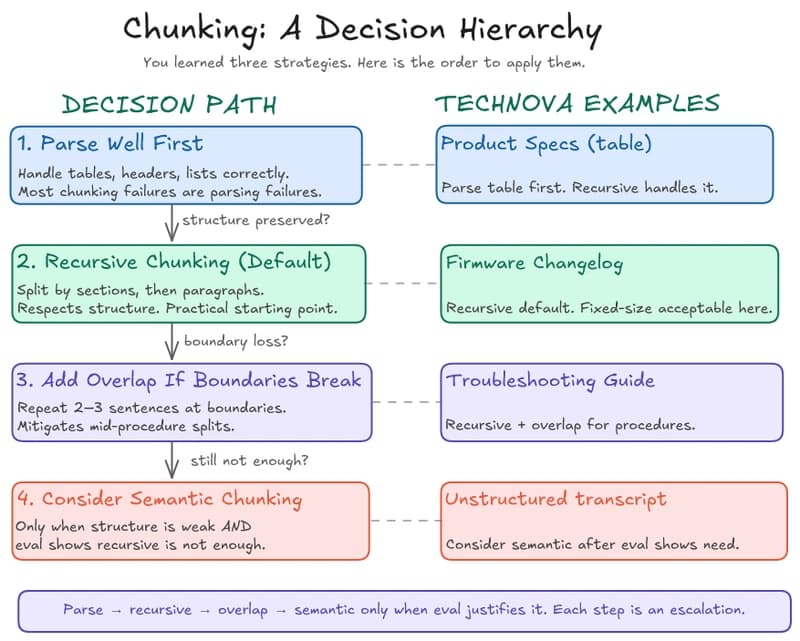
RAG in Practice — Part 4: Chunking, Retrieval, and the Decisions That Break RAG
Dev.to
Why dynamically routing multi-timescale advantages in PPO causes policy collapse (and a simple decoupled fix) [R]
Reddit r/MachineLearning

How AI Interview Assistants Are Changing Job Preparation in 2026
Dev.to

Consciousness in Artificial Intelligence: Insights from the Science ofConsciousness
Dev.to

NEW PROMPT INJECTION
Dev.to


