
 | Lately with all the buzz around new LLM releases, claude code limits and workflow or agents, skills and agents orchestration. I think it is nice every now and then to step back and actually understand some of the foundational stuff too. This week I had some time and spent it going back to understand FlashAttention from first principles. Standard attention is memory-bound, meaning it does not account for the GPU memory hierarchy and repeatedly shuffles large intermediate matrices between slow and fast GPU memory. FlashAttention addresses this by making attention IO-aware. It computes exact standard attention by restructuring the computation to minimize data movement between these memory levels. The result is faster training, longer context length support and lower attention memory footprint. I wrote a short blog on it. It is not an exhaustive deep dive but it goes deep enough to build intuition around why standard attention is slow and memory-bound and how FlashAttention fixes it using ideas like kernel fusion, tiling, recomputation, and online softmax. You can find the blogpost here: https://aayushgarg.dev/posts/2026-03-27-flash-attention/ [link] [comments] |
FlashAttention from first principles
Reddit r/LocalLLaMA / 3/27/2026
💬 OpinionDeveloper Stack & InfrastructureIdeas & Deep AnalysisModels & Research
Key Points
- The article explains that standard attention is memory-bound because it repeatedly moves large intermediate matrices between slower and faster GPU memory locations.
- It describes FlashAttention as an IO-aware approach that restructures the computation to reduce data movement while still computing exact standard attention.
- The post argues that FlashAttention can improve training speed, enable longer context lengths, and lower the attention-related memory footprint.
- It provides intuition for how these gains come from techniques such as kernel fusion, tiling, recomputation, and an online softmax strategy.
- The author positions the piece as a foundational, first-principles walkthrough intended to help readers understand why attention performance bottlenecks occur and how FlashAttention addresses them.
広告
Related Articles
![[Boost]](/_next/image?url=https%3A%2F%2Fmedia2.dev.to%2Fdynamic%2Fimage%2Fwidth%3D800%252Cheight%3D%252Cfit%3Dscale-down%252Cgravity%3Dauto%252Cformat%3Dauto%2Fhttps%253A%252F%252Fdev-to-uploads.s3.amazonaws.com%252Fuploads%252Fuser%252Fprofile_image%252F3618325%252F470cf6d0-e54c-4ddf-8d83-e3db9f829f2b.jpg&w=3840&q=75)
[Boost]
Dev.to
Managing LLM context in a real application
Dev.to
Got My 39-Agent System Audited Live. Here's What the Maturity Scorecard Revealed.
Dev.to
OpenAI Killed Sora — Here's Your 10-Minute Migration Guide (Free API)
Dev.to
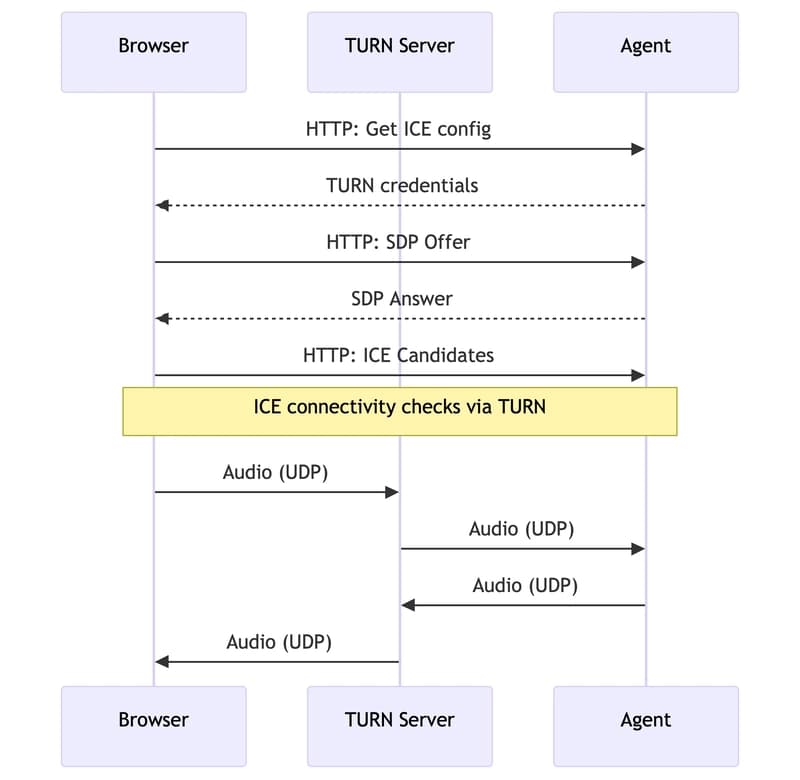
Switching my AI voice agent from WebSocket to WebRTC — what broke and what I learned
Dev.to


